Table of Contents
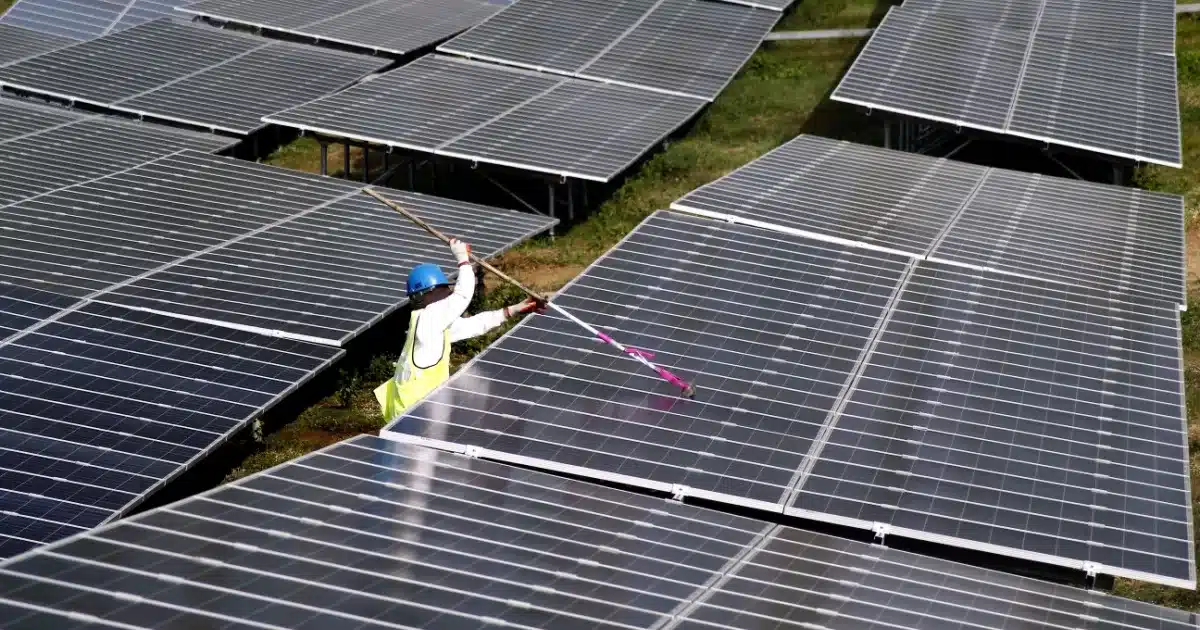
The Ombudsman is investigating Sen. Loren Legarda and her son, Batangas Rep. Leandro Leviste, over plunder and graft complaints tied to solar energy contracts worth more than P10.44 billion in unpaid government obligations.
Investigators say that the two used a network of corporations to secure multiple service contracts, gaining exclusive rights to develop solar projects and limiting competition. Several projects were never developed as required, leading to the termination of the contracts and the resulting financial obligations to the government.
Separately, the Department of Energy (DOE) has filed a complaint before the Department of Justice (DOJ) against Leviste and five officials of Solar Para sa Bayan Corp. (SPSB) for violations of the Public Service Act. The case centers on the company’s failure to meet its obligations to provide electricity to areas covered by its government franchise.
The allegations come as the country faces a growing power crunch, making the gap between promised and delivered capacity more consequential.
(Also read: Court Unblocks Socoteco 2 Vote On Ignite Power Partnership)
What Led to the Complaint
Leviste founded Solar Philippines in 2013, and the company later secured power projects and agreements from the DOE between 2014 and 2019, including 33 projects under the Green Energy Auction Program (GEAP).
In December 2018, the House of Representatives approved a 25-year franchise for SPSB, another Leviste-led company, allowing it to operate renewable energy (RE) systems in underserved areas.
Leviste welcomed the approval, saying the company would help “end energy poverty by 2022.”
Under its franchise, SPSB committed to develop solar projects with a combined capacity of 12,000 megawatts (MW), valued at P10 billion. But the company failed to meet that commitment in 2024 and 2025.
Back in 2024, the DOE had already flagged significant delays in projects of Solar Philippines Power Project Holdings Inc. (SPPPHI), Leviste’s RE company. During a Senate budget hearing, the DOE said it was processing the termination of 21 of the company’s 42 service contracts for failing to meet scheduled targets. At the time, only 174.41 MW of the committed 10,000 MW had reached commercial operation.
In January 2026, the DOE terminated 33 SPPPHI service contracts covering about 11,427 MW of planned RE capacity. The agency is also seeking roughly P24 billion in penalties and other contractual and financial obligations.
Meanwhile, the Energy Regulatory Commission (ERC) ordered SPSB to explain its operations in Paluan, Occidental Mindoro, following complaints over unauthorized facilities and unapproved power rates. The company could face up to P150 million in penalties, with some consumers reporting rates as high as P18 per kilowatt-hour.
However, Energy Secretary Sharon Garin recently told a DOE budget hearing that the government had collected just P80 million of the penalty, prompting a Philippine Daily Inquirer editorial to state that this “reinforced growing pessimism and even outright dismissal of the government’s resolve to keep erring power companies in line.”
The editorial also warned that letting power generators escape penalties for missed commitments could jeopardize the country’s energy development program.
“Veering away from this right path is unacceptable, and scams that should not be allowed to take root, especially at this time when the country urgently needs new energy sources to meet growing demand across the country, should not be tolerated,” it asserted.
How the Issue Exposed Gaps in GEAP
Rappler’s Val Villanueva argued that Leandro Leviste’s rise as an RE entrepreneur illustrates how “power, permissions and timing” can shape the Philippine energy market. The case also highlighted a broader problem: companies can secure contracts and regulatory approvals before delivering the promised power, leaving other stakeholders like utilities and consumers to bear the risks when projects fall short.
He noted that this is not unique to one company but reflects weaknesses in the system. “The Renewable Energy (RE) Service Contracts for development rights and the Green Energy Auction Program (GEAP) for securing power supply agreements can award scale far faster than it can enforce delivery.”
The gap between awarded and delivered capacity matters because, according to Villanueva, grid planning assumes committed projects will eventually come online. When projects are delayed or abandoned on a large scale, the country loses not only planned solar facilities but also the future supply factored into its energy plans. The result can be tighter reserves, more frequent alerts and greater reliance on expensive power.
The mismatch also raises concerns about how clean-energy projects are valued. “Projects can be priced before they produce,” Villanueva stressed. “If enforcement is slow or forgiving, the economic reward shifts from building megawatts to accumulating the permissions to someday build megawatts.”
For the Philippine Daily Inquirer’s Jake Maderazo, the real issue was “how the noncompliant firm (and others like it) crowded out the legitimate investors equipped with the financial, technical, and legal capabilities to do real energy projects.”
Meanwhile, the DOE must find new investors capable of delivering the power needed to meet rising demand and keep the grid stable, while also moving the country toward its target of raising renewables’ share of the energy mix from about 25% today to 35% by 2030.
(Also read: Mt. Apo Geothermal Plant Eyes Full Capacity As Mindanao Grid Expands)
Solar’s Main Challenge
But Leviste is only part of the story. The country’s push for solar power also has to contend with the inherent challenges of solar itself.
Garin said the RE capacity lost to the terminated contracts could have covered the country’s annual growth in electricity demand. The shortfall is particularly stark in the Visayas, which logged 652 hours of red and yellow alerts in August alone. The Wholesale Electricity Spot Market (WESM) prices surged 64.9% to P18.59 per kWh, amid tighter supply, plant outages and transmission constraints.
Generation shortfalls have been the dominant cause of power emergencies, accounting for more than 95% of red alerts nationwide from 2016 through June this year. According to the National Grid Corporation of the Philippines (NGCP), the recurring supply crunch highlights the need for reliable baseload plants in strategic locations across the grid.
In short, the expansion of solar and wind projects in the Visayas has not eliminated power alerts. Their output depends on weather and time of day, making them valuable additions to the grid but not a one-for-one replacement for firm generation. Without enough dependable capacity available when demand peaks, installed megawatts can look ample on paper while consumers still face supply shortfalls and rotating brownouts.
PhilStar’s Mary Ann Reyes wrote that Cebu’s power problem cannot be reduced to individual plant outages. It reflects a deeper failure to keep infrastructure and generation capacity in step with rising demand, and “by a public conversation that spent a decade celebrating renewable milestones without asking, with equal seriousness, what would carry the grid on the days that the sun and the wind did not cooperate.”
This was echoed by PhilStar’s Boo Chanco, who highlighted that solar output depends on the weather, making it less dependable for round-the-clock supply. During prolonged cloudy, rainy periods like the recent habagat, generation can fall sharply, and batteries cannot fully make up for the gap.
“Then there is capacity factor which essentially means that when the energy department announces new 4,000 megawatts of solar capacity, that number represents the nameplate capacity (the maximum possible output under perfect laboratory conditions), but the actual continuous impact on the grid is closer to an average of 800 MW (20 percent of that total),” he pointed out.
Additionally, large-scale solar development also raises land-use concerns. One estimate puts the land needed to replace proposed coal projects at roughly twice the combined area of Manila and Quezon City, while agricultural groups have warned that solar farms could compete with land needed for food production.
The broader lesson is that the country needs more than ambitious renewable energy targets. Projects must be built on time, deliver the capacity promised, and form part of a grid designed for reliable supply. The Leviste issue is a reminder that awarding contracts and securing commitments mean little if the promised power does not materialize.
Renewables will remain an important part of the country’s energy mix, but that push must go hand in hand with dependable capacity, realistic project timelines, and stronger enforcement. The DOE must keep enforcing these commitments and hold violators accountable, because when promised power fails to materialize, Filipino consumers ultimately bear the cost through higher electricity rates and an unreliable supply.
Sources:
https://www.philstar.com/business/2026/09/20/2557416/serious-allegations
https://opinion.inquirer.net/194327/coming-down-hard-on-solar-king
https://www.philstar.com/business/2026/09/16/2556515/our-coal-dilemma