Table of Contents
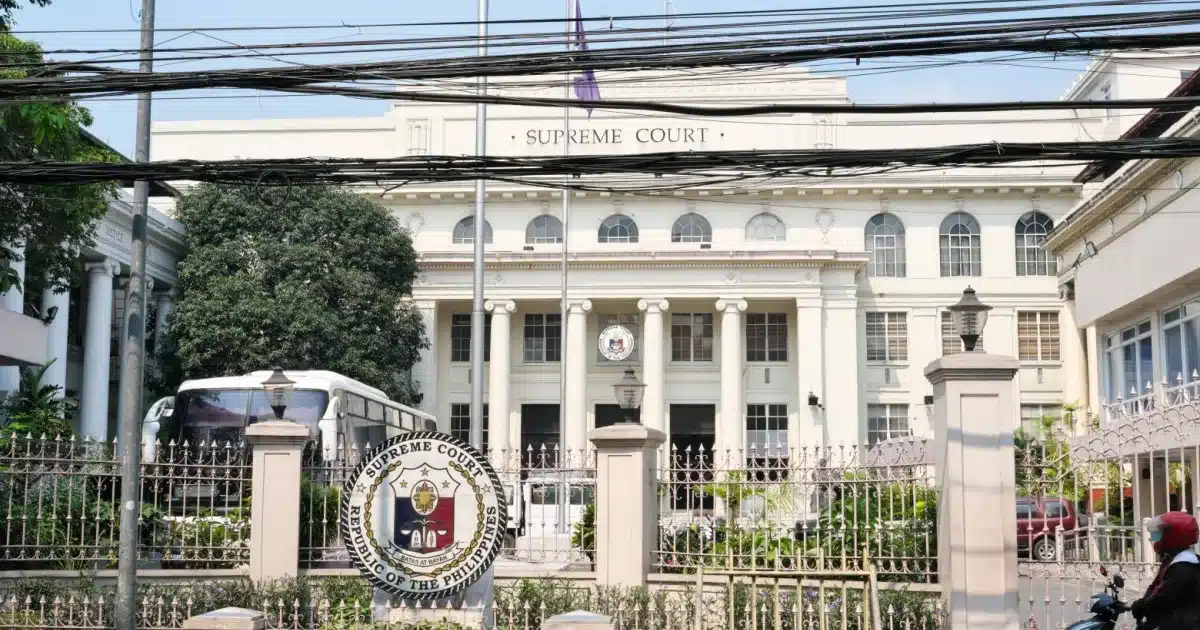
The Supreme Court (SC) has affirmed the constitutionality of the National Electrification Administration (NEA) Reform Act of 2013, turning down a legal challenge filed by electric cooperatives (ECs) and their officials who sought to block the law and its implementing rules.
In a unanimous ruling, the SC en banc dismissed consolidated petitions lodged by members of the Philippine Federation of Electric Cooperatives (Philfeco), rejecting claims that Republic Act No. 10531 violates constitutional protections afforded to ECs.
The Court held that both the law and its implementing rules are a valid exercise of the State’s police power, stressing that ECs operate under legislative franchises and are therefore subject to government regulation. It further underscored that the public character of electricity distribution warrants stronger state oversight to prevent inefficiency and abuse.
Writing for the Court, Associate Justice Maria Filomena D. Singh emphasized the unique nature of the sector, stating: “It cannot be emphasized enough that the very nature of the business of electric cooperatives, being imbued with public interest, entails the necessity for the State to guard closely against abuse and inefficiency. The law treats electricity not just like any property, and electric cooperative not just like any property owner.”
Republic Act No. 10531, or the NEA Reform Act of 2013, was signed into law by then-President Benigno S. Aquino III, together with its implementing rules and regulations. The measure strengthened the NEA by expanding its regulatory authority over ECs, including “step-in” powers that allow it to intervene in, rehabilitate, or even take over struggling ECs. The law was designed to improve financial stability and ensure the continuous delivery of reliable electricity in rural areas through more active state oversight.
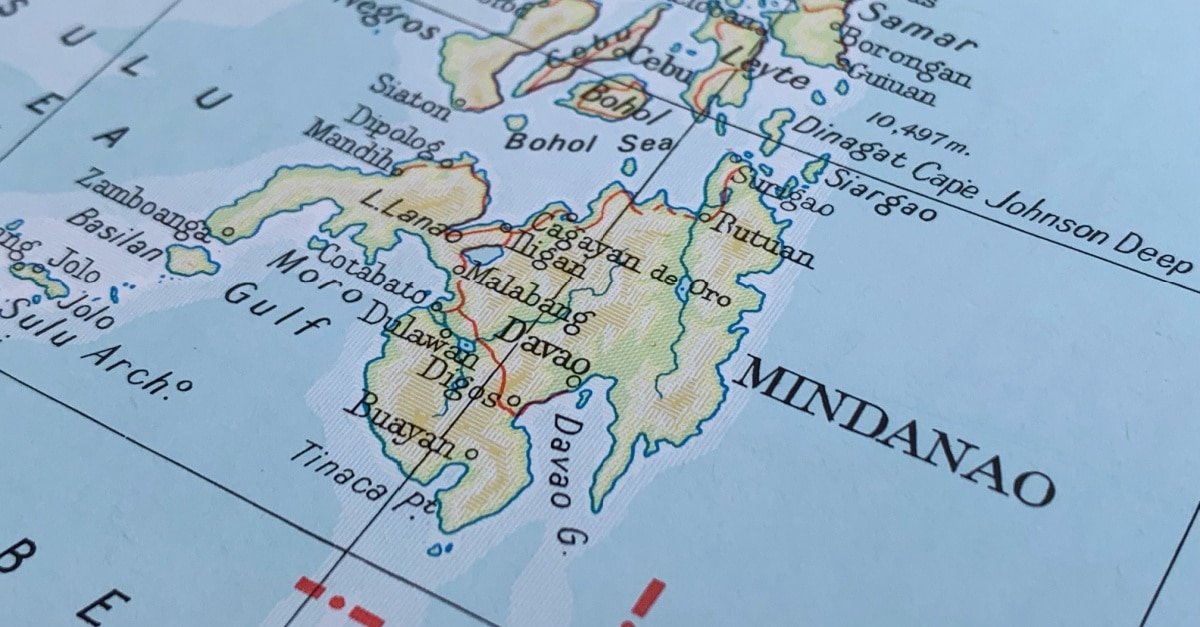
(Also read: Strong Earthquake Tests Resilience Of Mindanao’s Energy Infrastructure)
Key Issues Raised by the Petitioners
The petitioners, composed of ECs and their governing officials, argued before the SC that the NEA Reform Act infringes on constitutional protections for ECs under Article XII of the 1987 Constitution. They maintained that the law undermines provisions guaranteeing cooperatives the right to expand ownership, operate economic enterprises, and be supervised by a government agency dedicated to cooperative development and social justice.
They also questioned key regulatory powers granted to the NEA, particularly its authority to intervene in financially distressed cooperatives, exercise disciplinary action, appoint independent directors, and implement “step-in” measures under the reform law. According to the petitioners, these provisions encroach on the autonomy of ECs and exceed the bounds of permissible state regulation.
In addition, the petitioners raised an equal protection challenge, arguing that RA 10531 unfairly treats ECs registered under the Cooperative Development Authority (CDA) the same as those under NEA, while applying different standards to privately owned electric distribution utilities.
They further claimed that Sections 10 and 11 of the law, which set qualifications and disqualifications for cooperative officers and board members, were discriminatory and therefore not a valid exercise of police power.
As part of their plea, the petitioners also sought urgent relief from the SC through a writ of preliminary prohibitory injunction, a temporary restraining order, and a status quo ante order to halt the implementation of the law while its constitutionality was being reviewed.
However, the SC dismissed the consolidated petitions, stressing that constitutional review requires an actual, fact-based controversy, pointing out that petitioners failed to cite specific instances of injury even a decade after the law’s passage. It added that in the absence of such evidence, the Court cannot be drawn into policy decisions that fall within the powers of Congress and the Executive. As the Court stated: “In order to perform such mandate, it is reasonably necessary that the NEA exercise a certain degree of supervision and control over the operations of all electric cooperatives. The law precisely envisions a proactive government that pushes electric cooperatives to their highest possible operational fitness.”
The Court further emphasized that ECs operate under legislative franchises and are therefore subject to state regulation. It upheld the NEA’s expanded authority under the law, including its supervisory and disciplinary powers, as a legislative response to long-standing issues in the sector, such as financial instability, mismanagement, weak governance, and delayed government intervention.
SC Prioritizes Reliable Service Over EC Continuity
Electricity is an essential public service that must be reliable, efficient, and affordable. The SC has upheld that service quality prevails, allowing EC service areas to be reassigned to more capable providers to ensure stable and cost-effective electricity for consumers.
For instance, in 2022, Congress enacted Republic Act No. 11918, expanding MORE Power’s franchise from Iloilo City to Passi City and 15 nearby municipalities previously served by the Iloilo Electric Cooperatives (ILECOs).
Petitioners argued that the law violated the EPIRA framework and encroached on existing cooperative service areas, warning it could create a monopoly.
However, the SC upheld the expansion of MORE Power’s franchise in Iloilo, dismissing appeals filed by ILECOs, as well as the Philippine Rural Electric Cooperatives Association, Inc. (PHILRECA). It reiterated that electric utility franchises are not exclusive and may be modified by Congress in pursuit of public welfare and improved service delivery.
“A franchise, as a privilege granted by the state, is not the exclusive private property of the franchisee,” stated the SC. “Thus, it must yield to serve the common good, as determined by Congress.”
The SC further noted that, without competition, ECs could effectively set electricity rates without sufficient market checks. It held that allowing another qualified provider to enter the market advances consumer welfare by introducing competition and service options, even prior to the expiration of the ILECOs’ franchises. The ruling was also consistent with the Electric Power Industry Reform Act (EPIRA), which promotes competition within the power sector.
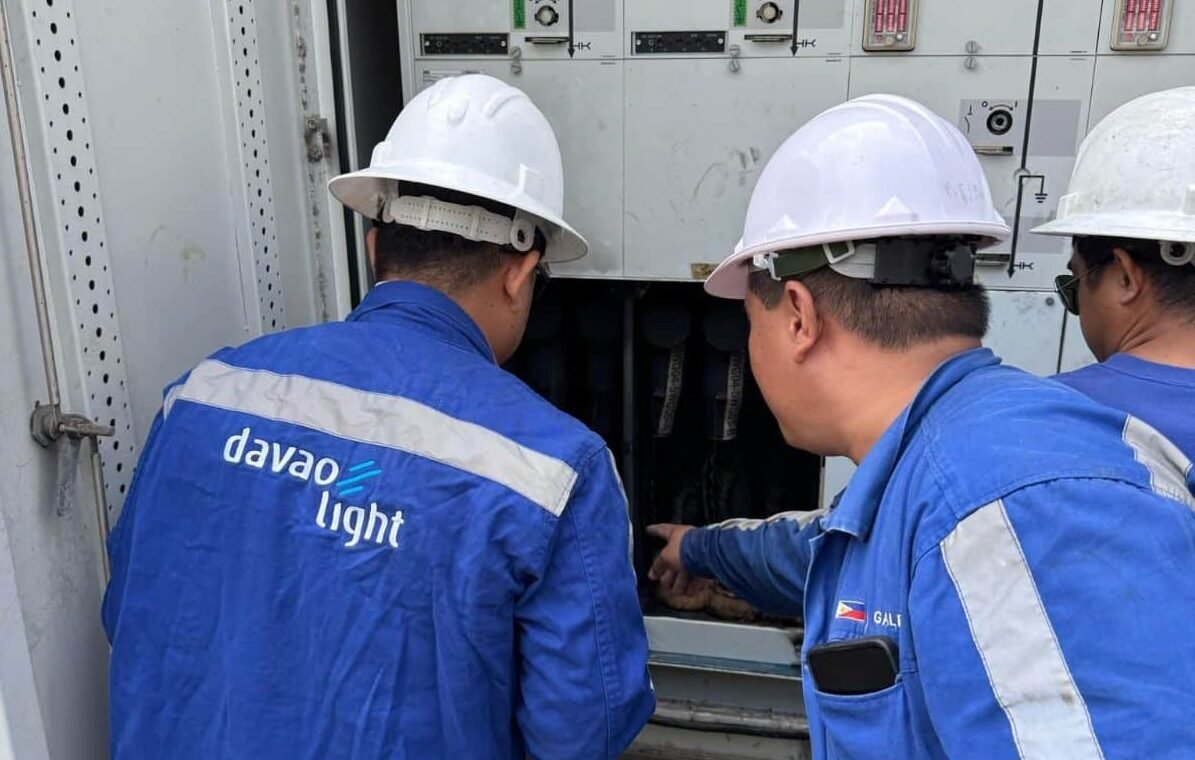
A similar shift toward a more efficient distributor occurred in 2025, when Republic Act No. 12144 lapsed into law, transferring electricity distribution in Tagum City, Samal Island, and parts of Davao del Norte and Davao de Oro from the Northern Davao Electric Cooperative (NORDECO) to Davao Light.
The move followed long-standing concerns over NORDECO’s service reliability and pricing, with lawmakers citing frequent outages and unresolved consumer complaints. During Senate hearings, Davao Light was noted for more stable service and lower rates, alongside significantly reduced system losses and fewer outages.
NORDECO filed a petition before the SC seeking to stop the implementation of the RA, arguing that it is unconstitutional. The EC claimed the law infringes on its existing franchises, which remain valid in mainland areas until 2028 and in Samal Island until 2033.
But the SC upheld the constitutionality of the law, dismissing petitions challenging its implementation. While petitioners argued that the law’s title failed to reflect provisions affecting NORDECO’s franchise, including asset valuation and related financial mechanisms, the Court disagreed, ruling that the title adequately states the law’s main purpose. It affirmed compliance with the Constitution, effectively denying NORDECO’s bid for a temporary restraining order and allowing the law to proceed.
(Also read: Why a Balanced Energy Mix Is Now Critical for the Philippines)
ECs Funded by Taxpayers
Consumer group Partners for Affordable and Reliable Energy (PARE) recently said that the debts of inefficient ECs ultimately burden consumers, as these costs are passed on through electricity bills. It warned that weak debt management reflects deeper financial problems that add to the public’s load.
The group also called for broader reforms in underperforming ECs through coordinated action involving regulators, local government units, Congress, and active consumer participation.
Beyond the financial strain of struggling ECs, Daily Tribune columnist Komfie Manalo noted that subsidies for ECs continue to burden taxpayers who are not even their direct customers. Critics argue that these subsidies should be reconsidered to reduce unnecessary public expense.
“Unlike private distribution utilities, co-ops enjoy preferential treatment which breeds inefficiencies as evidenced by very poor performances in many provinces,” he wrote. “Is there a plan in place to phase out subsidies that electric cooperatives throughout the country have been enjoying for half a century?”
Meanwhile, PhilStar columnist Mary Ann Reyes stated that during previous Senate hearings, it was noted that ECs received government loans, incentives, and subsidies intended to improve rural electrification and service delivery, yet many still struggled to meet growing demand.
“It is about time that a serious review of the state of rural electrification and power distribution in rural areas be undertaken to see how the private sector can come in and do business while making sure that public service comes first before profit,” she declared. “After all, power distributors are public utilities that perform a function vested with public interest.”
Sources:
https://www.rappler.com/philippines/sc-upholds-nea-reform-act-electric-cooperatives
https://lawphil.net/statutes/repacts/ra2022/ra_11918_2022.html
https://tribune.net.ph/2025/06/14/more-powers-expanded-franchise-upheld-with-finality-by-sc
https://www.pna.gov.ph/articles/1230320
https://www.sunstar.com.ph/davao/davao-light-franchise-expansion-becomes-law
https://www.facebook.com/photo?fbid=1012838544217591&set=a.446974487470669&_rdc=1&_rdr
https://www.sunstar.com.ph/davao/nordeco-challenges-davao-light-franchise-expansion-at-supreme-court
https://www.sunstar.com.ph/davao/supreme-court-upholds-davao-light-expansion
https://tribune.net.ph/2023/12/23/electricity-subsidies-to-electric-coops-a-never-ending-burden
https://www.philstar.com/business/2023/07/29/2284542/privatization-ecs-pushed