
Table of Contents
The consumer advocacy group Partners for Affordable and Reliable Energy (PARE) called on electric cooperatives (ECs) carrying the country’s largest unpaid energy settlements to explain their outstanding obligations and disclose concrete plans for settling them.
In a report released on November 5, PARE highlighted figures from the Independent Electricity Market Operator of the Philippines (IEMOP), showing that several ECs had accumulated hundreds of millions, and in one case over a billion, in unpaid energy obligations as of October 30, 2026.
Northern Davao Electric Cooperative (NORDECO) topped the list with ₱1.21 billion in outstanding settlements. It was followed by Albay Electric Cooperative (ALECO) with ₱568.51 million, Northern Samar Electric Cooperative (NORSAMELCO) with ₱259.84 million, Abra Electric Cooperative (ABRECO) with ₱259.11 million, and Zamboanga del Sur I Electric Cooperative (ZAMSURECO II) with ₱213.03 million.
PARE Chief Advocate Officer Nic Satur Jr. stressed the need for ECs to account for their unpaid balances and explain how they intend to meet their obligations. Consumers, he said, deserve to know whether these financial difficulties could affect electricity supply, service reliability, or future rates.
“Unpaid balances alone do not establish wrongdoing, but transparency and accountability remain essential,” stated Satur. “Consumers deserve affordable, reliable electricity and responsible cooperative management.”
(Also read: Super El Niño Puts Mindanao’s Hydropower at Risk, Exposing Urgent Need for Energy Diversity)
The ECs Carrying the Biggest Energy Debts
A closer look at these ECs reveals the financial difficulties, operational challenges, and consumer concerns shaping their respective situations.
Northern Davao Electric Cooperative (NORDECO)
NORDECO’s financial troubles have added to longstanding concerns over its ability to provide reliable and affordable electricity. The cooperative’s unpaid energy settlements eventually led to its suspension from the Wholesale Electricity Spot Market (WESM) in 2025.
According to the IEMOP, NORDECO was barred from participating in WESM after repeatedly failing to settle its energy obligations. Its outstanding balance reached approximately ₱337.6 million as of September 25, among the largest unpaid amounts recorded among market participants.
The suspension was a particularly serious development because nearly half of NORDECO’s electricity supply had reportedly come from the spot market in July 2025. Consumer groups warned that losing access could constrain its supply options, potentially increasing the risk of power interruptions and higher electricity costs.
The financial controversy has compounded years of complaints about the EC’s rates and service quality. In January 2026, consumers again questioned NORDECO’s electricity charges after the Davao Consumer Movement (DCM) collected residential bills showing a rate of approximately ₱14.81 per kilowatt-hour (kWh).
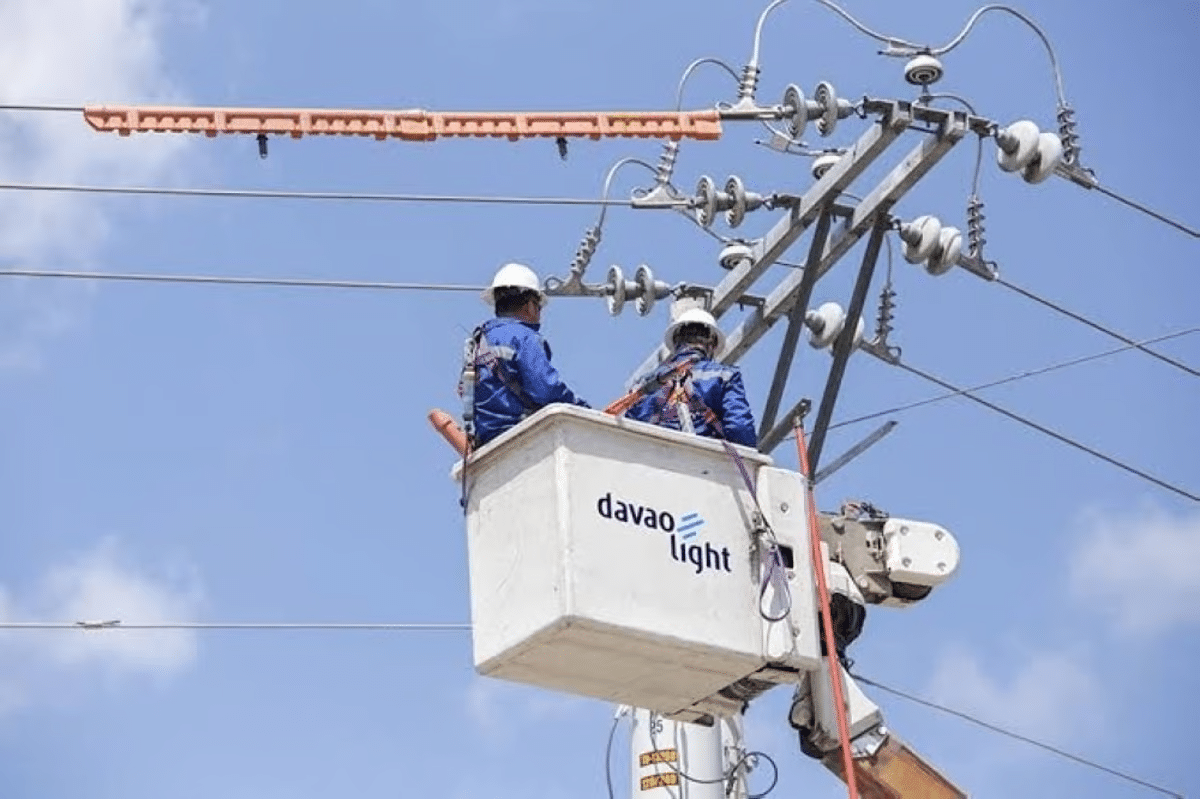
The figure was significantly higher than Davao Light’s residential rate of around ₱11.72/kWh for the same month, even after the private utility implemented a ₱2/kWh increase due to higher generation costs.
DCM gathered the figures from consumers because NORDECO did not regularly publish its monthly rates. The disparity further fueled questions about transparency as households continued to contend with concerns over service reliability.
Albay Electric Cooperative’s (ALECO)
The Albay Electric Cooperative (ALECO), which has struggled for years to improve its performance, is facing mounting pressure from local officials and consumers over its ₱5.7-billion debt, recurring power interruptions, and persistent operational shortcomings. Albay Governor Noel Rosal pointed to the staggering financial burden as a reason for immediate structural reforms in the EC’s management.
Its operational record offers little reassurance. Data from the Energy Regulatory Commission (ERC) showed that the combined operations of ALECO and Albay Power and Energy Corp. (APEC) posted system losses of 21.5% in 2025, placing them among the worst-performing distribution utilities in the country.
The financial and operational problems have also fueled growing frustration over frequent blackouts across the province. During a meeting of the League of Municipalities of the Philippines–Albay Chapter, mayors called on ALECO to put an end to recurring weekly interruptions.
ALECO’s struggles have persisted despite its return to cooperative management. In the National Electrification Administration’s (NEA) 2024 performance assessment, it remained in the agency’s red category, marking its eighth consecutive year classified as an EC since the ratings began in 2016.
Northern Samar Electric Cooperative (NORSAMELCO)
Northern Samar consumers are facing some of the country’s steepest electricity costs, with residential rates under NORSAMELCO reaching nearly ₱17 per kilowatt-hour (kWh) in January 2026.
At ₱16.907/kWh, NORSAMELCO’s residential rate was reportedly the highest in the country that month, despite the EC’s assertion that it had not raised its distribution charge since 2010.
The issue has prompted Northern Samar 2nd District Representative Edwin Ongchuan, vice chair of the House Committee on Energy, to push for a closer examination of electricity billing practices. With concerns over a looming energy crisis potentially putting further pressure on power prices, the lawmaker wants to determine whether certain charges are justified and how they affect consumers.
Meanwhile, the EC’s financial troubles date back more than a decade, when its liabilities ballooned from just ₱12 million in 2011 to over ₱641 million, eventually prompting the Power Sector Assets and Liabilities Management Corp. (PSALM) to cut off its electricity service.
The financial collapse was attributed to alleged mismanagement and widespread irregularities under previous administrations. Two comprehensive financial and management audits conducted by NEA reportedly uncovered serious problems, resulting in the agency’s takeover of NORSAMELCO’s management and operations. NEA also dismissed the cooperative’s board of directors following complaints of corruption and abuse of authority filed by thousands of member-consumers and employees.
The scale of the debt required an intervention to keep the EC afloat. In November 2018, NORSAMELCO and PSALM signed a loan restructuring agreement that required the cooperative to pay ₱6.2 million monthly toward its outstanding obligations of approximately ₱614 million. Under the arrangement, payments were scheduled to continue until the debt was fully settled in 2026.
Beyond the cost of electricity, however, power interruptions have also affected daily life in Northern Samar. A student research presentation examining NORSAMELCO’s outages and their impact on senior high school students at St. Francis College in Allen described scheduled Saturday interruptions alongside unscheduled outages occurring more than five times a month. These disruptions can leave students struggling to complete assignments that depend on electricity, computers, and internet access.
(Also read: MGEN Eyes Added Capacity As Mindanao Power Demand Rises)
Consumers Deserve Better, More Reliable Electricity Service
At the heart of these financial troubles are consumers who depend on electricity every day to keep their homes running, help their children study, earn a living, and sustain their businesses. Whatever the reasons behind each cooperative’s unpaid obligations, ordinary households should not have to bear the consequences of poor financial management or longstanding operational problems.
Reliable electricity is a necessity. Frequent interruptions, high power bills, and uncertainty over supply can make everyday life more difficult, particularly for families and small businesses already struggling with rising expenses. Consumers deserve to know whether their ECs are financially capable of securing a stable power supply and keeping electricity costs manageable.
It is little wonder, then, that some ECs are facing growing calls to bring in private-sector partners. In Albay, efforts to reprivatize ALECO gained traction in 2025 as lawmakers considered a private takeover amid concerns over high system losses, rising electricity rates, and mounting debt. Meralco also expressed interest in investing in the cooperative.
A similar transition unfolded in Davao, where Republic Act No. 12144, effective April 2025, expanded NORDECO’s franchise coverage to Tagum City, Samal Island, and parts of Davao del Norte and Davao de Oro. By December 2025, the ERC had granted Davao Light provisional authority to serve the newly covered areas, paving the way for a shift away from NORDECO.
Ultimately, consumers should not be left wondering whether their electricity will stay on or whether their bills will remain affordable. They deserve distribution utilities that are financially responsible, responsive to their concerns, and capable of providing dependable service. After all, the true measure of any power distributor is not simply its financial standing, but how well it serves the people who depend on it.
Sources:
https://www.facebook.com/share/p/1A2bPAJSHD
https://tribune.net.ph/amp/story/2026/01/28/davao-light-granted-provisional-authority-for-expansion
https://www.facebook.com/photo/?fbid=1308662471301862&set=a.446974487470669
https://www.sunstar.com.ph/davao/nordeco-suspended-from-wesm
https://www.rappler.com/philippines/luzon/will-aleco-reprivatization-worsen-albay-power-woes-groups
https://tribune.net.ph/2026/08/13/albay-co-ops-top-system-loss-list
https://tribune.net.ph/amp/story/2026/03/18/solon-seeks-review-of-power-bills-charges
https://www.scribd.com/presentation/824218478/ninz
https://www.sunstar.com.ph/davao/nordeco-appeals-to-pbbm-prevent-passage-of-bill
https://www.sunstar.com.ph/davao/davao-light-gets-green-light-to-connect-new-customers
https://www.rappler.com/philippines/luzon/will-aleco-reprivatization-worsen-albay-power-woes-groups