Table of Contents
Davao City is moving closer to developing a waste-to-energy (WTE) facility that will process up to 600 tons of garbage daily and generate about 11 megawatts (MW) of electricity for sale. The development comes after City Council’s approval of the project’s bidding documents and its inclusion among the potential winning bidders in the Department of Energy’s (DOE) first WTE auction.
The City Council approved on third and final reading on Nov. 17 the ordinance adopting the bidding documents for the project, paving the way for the competitive procurement of a private contractor under a build-transfer-operate (BTO) arrangement.
Councilor Temujin Ocampo, the ordinance’s proponent, said the city would not shoulder the construction costs, as the project will be funded through Japanese grant assistance and a private partner that will finance the remaining portion.
Under the BTO scheme, the contractor will build the facility and turn it over to the local government, which will operate the plant. The city will also establish a special-purpose company to manage operations and sell the electricity generated.
Japanese Backing
The project is being pursued under Japan’s Grant Aid to the Philippines, covered by an Exchange of Notes and Agreed Minutes on Procedural Details signed on March 20, 2018.
Japan initially committed ¥5.013 billion, equivalent to about ₱2.5 billion, for the facility. Ocampo said the Japanese government would cover half of the required funding, while the winning private contractor would finance the other half.
The project’s estimated cost has increased from about ₱5 billion to between ₱7 billion and ₱3.5 billion, depending on the latest estimates cited by officials. Ocampo placed the current working estimate at around ₱3.5 billion, although the amount may still change depending on construction material costs. The differing cost estimates will need to be reconciled as procurement moves forward.
Crown Agents Japan will facilitate the bidding process, including identifying qualified companies that can participate. Procurement will follow the Japanese government’s grant aid guidelines, with the city adopting the necessary bidding procedures.
The documents approved by the council cover the invitation to bid, instructions to bidders, technical and engineering requirements, and the proposed contracts for engineering, procurement, and construction, as well as operation and maintenance services.
Ocampo said the city would next appropriate an additional ₱88 million for the performance bond required for the power bidding.
DOE Auction
The project gained another boost after Davao City was identified among nine qualified bidders in the DOE’s first Special Green Energy Auction for Waste-to-Energy.
The auction received 12 submissions covering 12 proposed projects with a combined offered capacity of 428 MW. Davao City was the only local government unit among the nine qualified bidders, offering 11 MW of electricity from its planned facility.
All submitted offers passed the DOE’s evaluation, which covered bid bonds, generating capacities, electricity prices, and committed delivery schedules. The offered prices were also below the agency’s approved reserve price.
The projects committed to begin electricity delivery no later than Dec. 31, 2029. However, inclusion in the Notice of Award does not mean final approval, as bidders must still submit additional requirements, including performance bonds and applicable grid impact study documents.
Energy Secretary Sharon Garin said the auction would encourage investments that turn municipal solid waste into an energy resource while helping communities address growing garbage disposal problems.
Davao City’s proposed facility will be constructed on a nine-hectare property in Barangay Biao Escuela, Tugbok District. It is designed to process approximately 600 tons of municipal solid waste daily and produce about 13 MW of electricity. After accounting for the plant’s own consumption, around 11 MW would be available for sale to the grid.
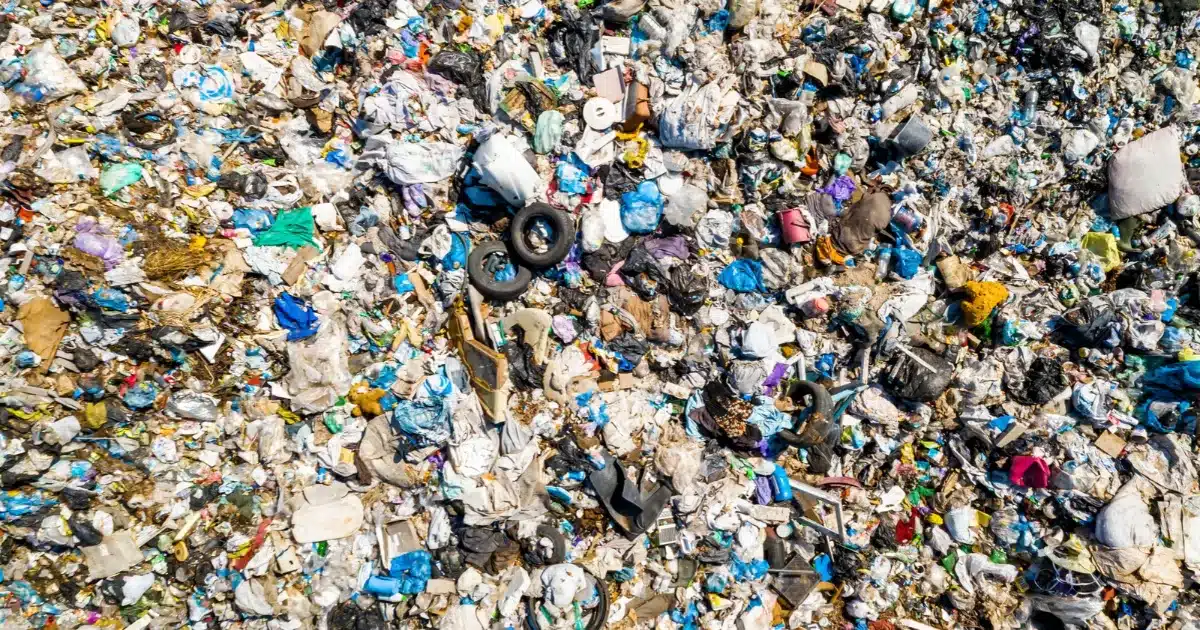
The city generates an estimated 700 to 800 tons of garbage daily, placing increasing pressure on its disposal infrastructure. Its existing New Carmen Sanitary Landfill in Tugbok has faced capacity constraints, prompting the local government to pursue additional waste management solutions. The city opened another sanitary landfill in June as it addressed the limitations of its 19-year-old disposal facility.
Waste Segregation
The plant’s operation will require stricter waste segregation to ensure that materials suitable for energy recovery are properly separated before collection.
Ocampo said the city would mobilize barangays to enforce segregation at source, beginning with households. Organic waste and other materials that are unsuitable for combustion must be separated to ensure the remaining waste has sufficient calorific value for efficient processing.
The stricter implementation is expected to reinforce the city’s solid waste management ordinance, making segregation a necessary part of the WTE project’s operations rather than an optional practice.
Environmental compliance will also be a major requirement before the facility can proceed.
Environmental Management Bureau (EMB) chief Arnufo Alvarez said WTE implementing rules require facilities to install air pollution control equipment capable of capturing and treating dioxins and furans, toxic compounds that can pose serious health and environmental risks.
The plant must also maintain continuous emissions monitoring, with results displayed outside the facility, and install wastewater treatment systems.
Alvarez said the EMB would work with the city and the Japan International Cooperation Agency (JICA)-hired consultant to ensure compliance with environmental requirements. A public scoping session was conducted on April 15, 2026, at the Biao Escuela barangay gymnasium to identify potential social and environmental impacts.
An expert review committee covering air, water, toxic chemicals, land, and public concerns has also been formed as part of the environmental impact assessment process.
The project must comply with the Environmental Impact Assessment System and applicable solid waste management regulations, including Republic Act 9003, or the Ecological Solid Waste Management Act of 2000.
The city is targeting completion of the facility by December 2029.
Source:
https://www.sunstar.com.ph/davao/davao-city-advances-in-phs-first-waste-to-energy-auction
https://pia.gov.ph/news/davao-citys-waste-to-energy-project-making-progress