Table of Contents
Davao City’s proposed waste-to-energy (WtE) incineration facility is facing renewed scrutiny from environmental advocates and residents, who say the local government should address gaps in waste segregation and recycling before committing to a project expected to generate about 13 megawatts of electricity.
The proposed facility, targeted for completion in 2028 or 2029, is part of the city’s long-term response to its growing garbage problem. But Interfacing Development Interventions for Sustainability (IDIS) has warned that investing in incineration before strengthening existing waste management systems could undermine the city’s circular economy efforts and expose communities to environmental and health risks.
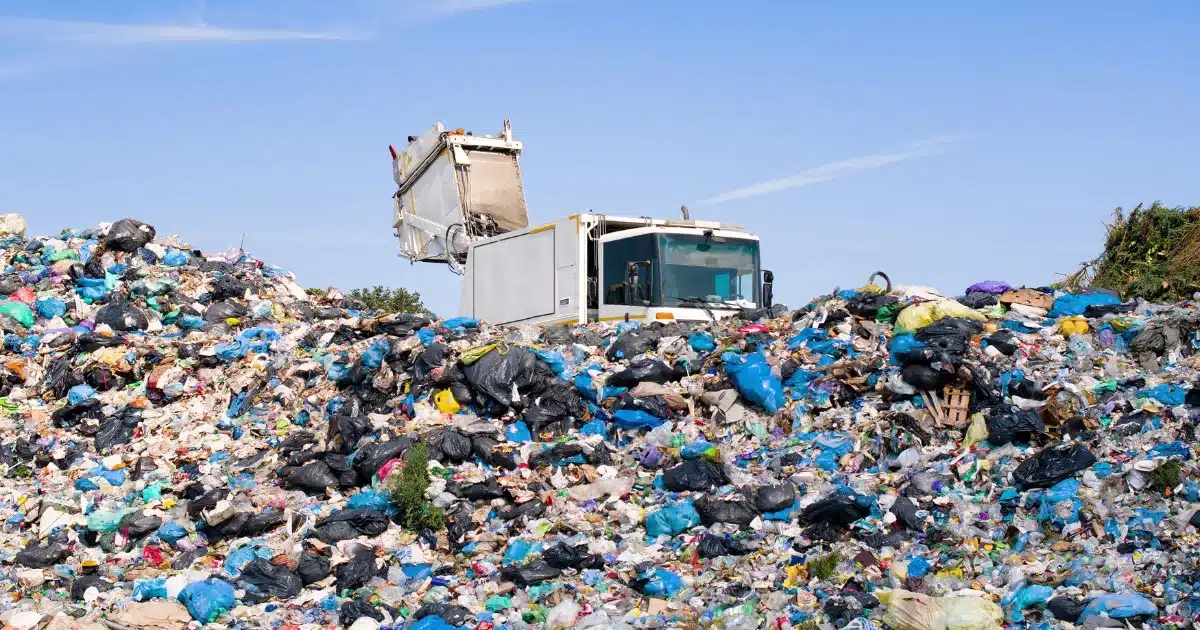
The debate comes as Davao generates an estimated 700 to 800 tons of municipal solid waste daily, according to a March 2026 project document from the Department of Environment and Natural Resources-Environmental Management Bureau Region 11.
Waste Collection Practices Questioned
For some residents, the problem begins before garbage reaches any proposed processing facility.
Lenette Cambalon, 58, who runs a small eatery in Barangay 32-D, separates food scraps from recyclables twice a week. She said, however, that the effort becomes pointless when garbage collectors mix the waste at neighborhood collection points.
“They are no longer segregated when placed in the sacks,” Cambalon said in Cebuano. “It’s still useless for you to segregate it. They’re just going to mix it all up anyway.”
Emelita Sumas, 32, of Barangay 11-B, reported a similar experience, saying residents often see their segregated waste combined after disposal. She also said people from outside the neighborhood sometimes dump garbage at the collection point, while identification cards intended to regulate access are not consistently checked.
The accounts point to implementation problems that could complicate the city’s plans to process waste for electricity generation, particularly because the proposed facility would require an appropriate mix of combustible materials.
Councilor Temujin Ocampo, chair of the City Council Committee on Environment and Natural Resources, said waste intended for incineration must have adequate calorific value and be relatively dry. Food waste, wet materials, and certain medical waste should be handled separately.
“Their understanding is that all the trash is to be burned,” IDIS Executive Director Atty. Mark Peñalver said. “The only things that should be burned there are the residuals.”
Uneven Waste Management
Davao has 182 barangays, but only 53 have Materials Recovery Facilities (MRFs), while 116 have Materials Recovery Stations (MRSs). The city also has 47 composting facilities, and 96 barangays meet waste management compliance standards.
CENRO Environmental Waste Management Division head Engr. Lakandiwa Orcullo acknowledged that some barangays maintain MRFs mainly “for compliance” without fully using them.
In September 2025, the National Solid Waste Management Commission and EMB-11 validated the city’s 10-year Solid Waste Management Plan, recognizing improvements but recommending stronger segregation at source and expanded composting capacity.
The city’s 2018-2027 ecological solid waste management plan, approved in December 2019, included WtE as part of its strategy to raise waste diversion from 31% in 2017 to 92% by 2027.
Crown Agents Japan announced on Oct. 7 that procurement had opened for the design, construction, operation and maintenance of WtE facilities under a Japanese government grant.
The development advances preparations for the project, although environmental advocates argue that the city must first demonstrate that existing waste reduction and recovery measures are working effectively.
Health And Climate Risks
IDIS reiterated its opposition to thermal incineration, arguing that it could encourage continued waste generation rather than prioritize prevention, reuse and recycling.
“We believe that the introduction of the incineration project is a step backward in terms of city efforts,” Peñalver said.
The group also disputed the characterization of WtE incineration as green or renewable energy, citing concerns over emissions, toxic combustion residues and the potential accumulation of dioxins and furans. It said emission controls do not eliminate all environmental risks associated with these substances.
IDIS further raised concerns about water consumption, warning that incineration plants could compete with households for water during severe dry spells associated with El Niño.
Rather than prioritize the facility, the group urged the city to enforce Republic Act No. 9003, or the Ecological Solid Waste Management Act of 2000, through fully operational recovery facilities, community recycling programs and a strict “no segregation, no collection” policy.
Peñalver also called for stronger watershed protection, urban wetlands preservation, expanded green spaces and rainwater harvesting as part of the city’s broader climate resilience efforts.
The proposed incineration project has yet to resolve the central question facing Davao’s waste strategy: whether electricity generation should become a larger part of waste management before the city has fully addressed the collection, segregation, composting, and recycling gaps that determine how much garbage needs to be burned.
Source:
https://www.sunstar.com.ph/davao/idis-opposes-davao-citys-waste-to-energy-project-bid
https://tribune.net.ph/2026/10/03/davao-eyes-wte-plant-by-2029