Table of Contents
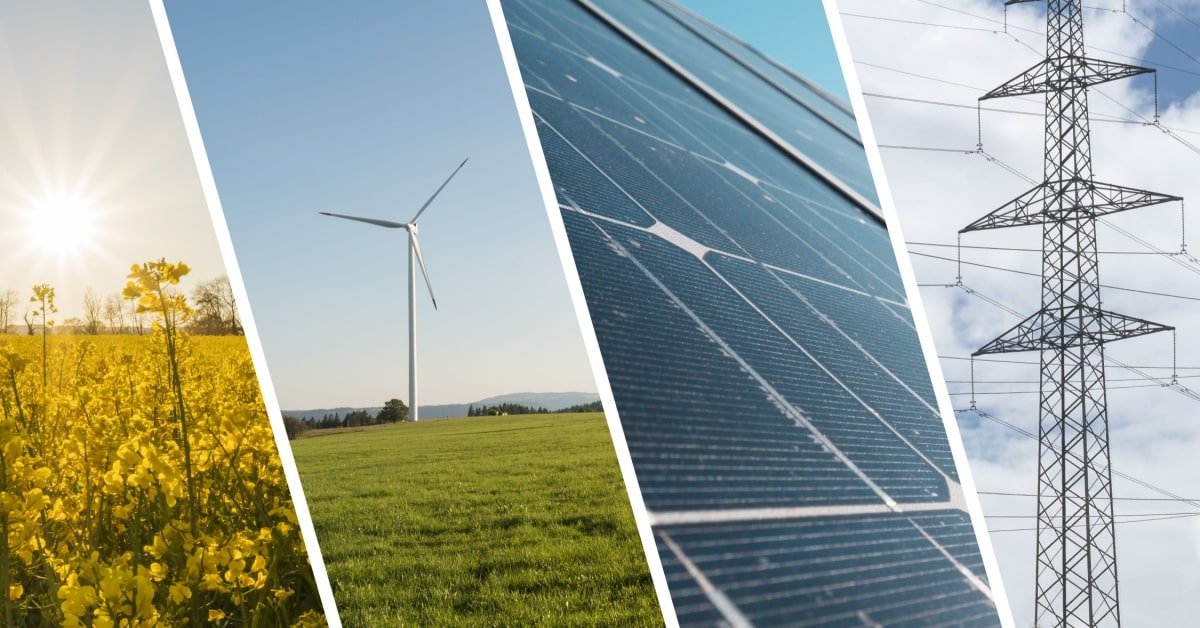
The Philippines is targeting a major shift in its energy system, aiming to raise the share of renewable energy to 35% by 2030 and 50% by 2040 under the Philippine Energy Plan of the Department of Energy (DOE).
“The earlier these projects are completed, the more they can help reduce our dependence on imported petroleum products,” stated the agency.
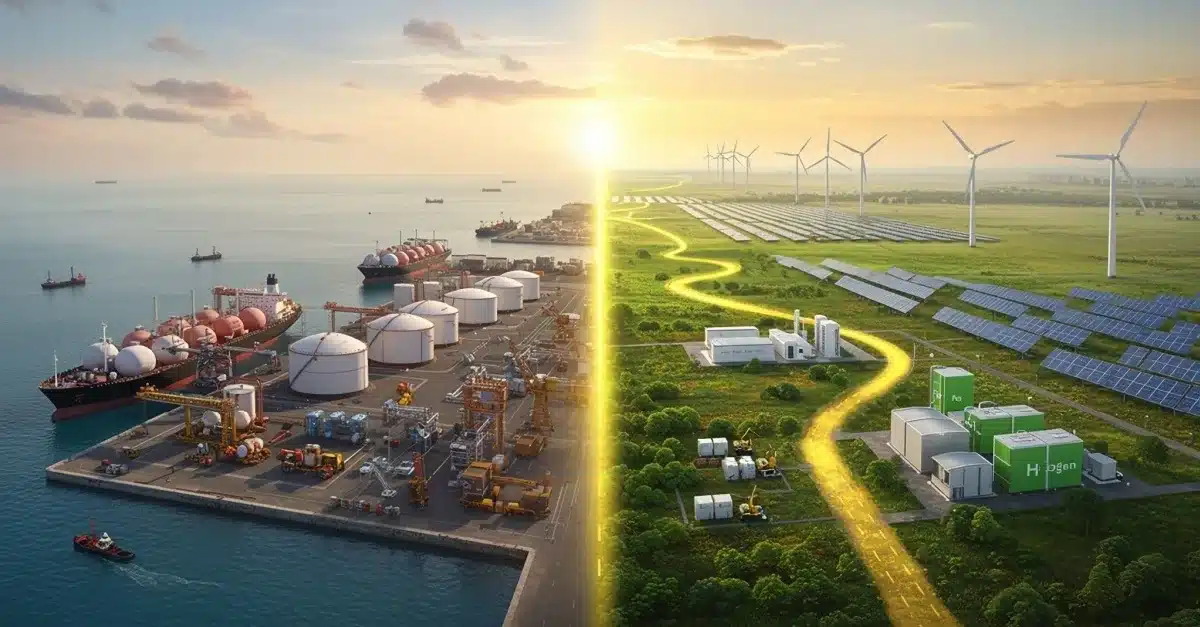
This push reflects a broader global pattern, where countries are turning to cleaner energy sources in response to long-standing shifts in how societies produce and consume power.
Energy transitions have happened before, from wood to coal during industrialization, and later from coal to oil as transport and industry evolved. Each shift was driven by necessity, technology, and changing demand. The oil shocks of the 1970s and rising energy costs renewed interest in alternatives, while growing awareness of climate change added urgency to the shift toward cleaner energy.
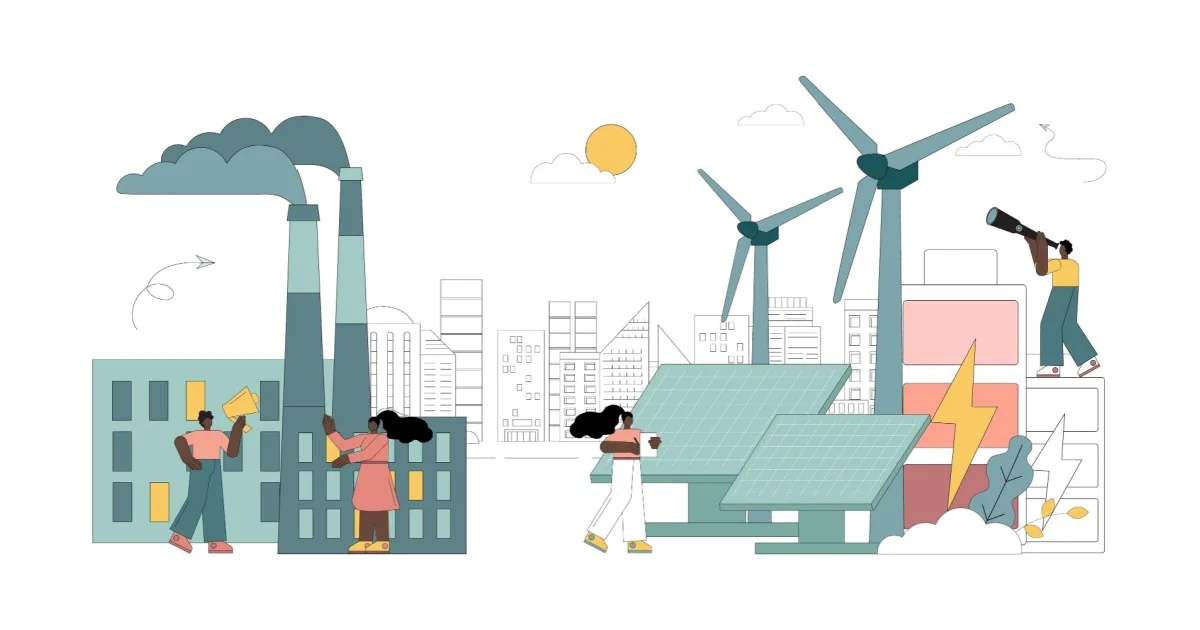
Today’s transition focuses on moving away from fossil fuels toward renewables like solar, wind, and hydropower to cut emissions and address climate risks. But it goes beyond generation alone, requiring stronger grids, energy storage, electrification, and policies that balance reliability, affordability, and sustainability.
However, some experts argue there is no true “energy transition,” only energy addition. In his paper“Welfare in the 21st century: Increasing development, reducing inequality, the impact of climate change, and the cost of climate policies,” political scientist Bjorn Lomborg noted that energy systems tend to expand rather than be replaced. Historically, new sources have added to the mix instead of displacing older ones. As oil use grew, coal did not disappear, and natural gas rose alongside continued demand for both coal and oil.
(Also read: Davao Light Expansion Gains Court Support, Strengthens Samal Power Supply)
Renewables Rise, but Fossil Fuels Keep Climbing
Even as global temperatures repeatedly pushed past the 1.5°C threshold, energy-related CO₂ emissions still climbed by about 1% in 2024, extending a streak of new highs for a fourth consecutive year. Clean power expanded quickly, with wind and solar rising roughly 16%, far outpacing overall energy demand, yet not enough to offset continued growth in fossil fuel use.
But the global picture remains uneven. Demand increases were concentrated in non-OECD countries, meaning countries outside the Organization for Economic Co-operation and Development group of mostly advanced, high-income economies. In these countries, oil consumption continued to edge higher, while natural gas rebounded by about 2.5% after the previous year’s dip. Coal use also strengthened, with India posting a 4% rise that underscores how traditional fuels still anchor much of the world’s expanding energy needs.
This divergence is largely driven by industrial activity, which remains the biggest consumer of energy globally. It also reflects structural differences in energy systems, as advanced economies shift toward more efficient and less carbon-intensive production, while many developing economies continue to rely on more energy-intensive industrial processes to support growth and development.
“Electrification is accelerating, particularly across developing economies where access to modern energy is expanding rapidly,” stated Energy Institute President Andy Brown. “However, the pace of renewable deployment continues to be outstripped by overall demand growth, 60% of which was met by fossil fuels.”
The International Energy Agency’s (IEA) Global Energy Review 2026 shows a similar pattern, with low-emissions sources such as solar, wind, nuclear, and hydropower meeting nearly 60% of global energy demand growth last year. Solar PV stood out, posting the largest single-year increase in electricity generation from any energy source on record.
But fossil fuels still registered growth, with coal consumption rising by 0.4%, while oil demand increased by 0.65 million barrels per day, largely driven by petrochemicals and aviation. Natural gas use also climbed by about 40 billion cubic meters, underscoring a system where both clean energy and fossil fuels continue to expand side by side.
Energy Demand and Economic Growth: An Inseparable Pair
Over the past two decades, rapid economic growth has helped lift over 660 million people out of poverty and significantly improved living standards. But that progress has come with high environmental costs. The experience underscores a central tension in development: growth driven by intensive resource extraction often carries lasting ecological consequences, making the pursuit of “green growth” a continuing challenge.
Green growth depends on the idea of decoupling, allowing the economy to expand without increasing pressure on the environment. In simpler terms, this means economic output can rise while environmental damage is reduced or avoided. Achieving full climate goals would require absolute decoupling, where gross domestic product (GDP) continues to grow even as greenhouse gas emissions consistently fall.
But is this possible?
Vaclav Smil, author of How the World Really Works, underscored the sheer scale of global reliance on fossil fuels, noting that annual fossil carbon use exceeds 10 billion tons, far surpassing major global material flows such as staple grains or drinking water. ‘Both the high relative share and the scale of our dependence on fossil carbon make any rapid substitutions impossible: this is not a biased personal impression stemming from a poor understanding of the global energy system – but a realistic conclusion based on engineering and economic realities,” he wrote.
Over the past decade, several high-income countries like Germany, France, and Canada have managed to cut carbon emissions while still growing their economies, a trend often cited as evidence of “green growth.” But research, including a study in The Lancet, found these reductions remain far below what is needed under the Paris Agreement, which aims to limit warming to 1.5°C.
At current rates, the study warned it would take centuries for these countries to reach deep decarbonization targets, and emissions would far exceed their fair share of the remaining carbon budget. To stay within climate limits while maintaining growth, decoupling would need to accelerate dramatically. This gap has led many researchers to question whether green growth alone can deliver emissions cuts at the speed required.
“… if green growth is supposed to be consistent with the climate and equity targets of the Paris Agreement, then green growth has not been achieved in high-income nations, and it appears very unlikely to be achieved in the future,” pointed out the study, Is Green Growth Happening.
For science historian Jean-Baptiste Fressoz, the idea of an “energy transition”, which is believed to facilitate green growth, is too simple to reflect reality. He said energy systems are deeply interconnected rather than neatly replacing one another.
“We’ve been accustomed to this idea that in the past, there have been several energy transitions, and if we have done it before through capitalist innovation, we just have to do it again,” he asserted. “But what we are doing with new technologies such as solar panels, and to a lesser extent with electric vehicles, is not an energy transition.”
He continued to explain that what is being done is cutting carbon emissions for every unit of economic activity. “Electric cars represent progress compared to combustion engine cars, but they are not carbon neutral,” he pointed out, adding that the green transition promotes the false idea of a carbon-free economy that can keep growing without impacting the climate.
“It’s a convenient way of thinking of the climate crisis, but also a dangerous one because this shift is not going to happen,” he stated. “One of the key responses to the climate crisis should be a politics of redistribution. “
The politics of redistribution refers to policies and ideas focused on more fairly reallocating wealth, resources, and opportunities within societies—and, in global debates, between countries.
(Also read: When Transmission Fails: Red Alerts Expose the Fragility of the Grid)
The Philippines’ Emissions: Necessity, Not Luxury
The Philippines accounts for about 0.5% of global emissions but remains highly exposed to climate impacts, while often facing the same decarbonization expectations as industrialized economies that built wealth over centuries of high emissions. This gap between responsibility and required action is seen as both unfair and economically risky.
Manila Times columnist Ben Kritz framed this divide as one between “subsistence” and “luxury” emissions, where developing economies like the Philippines are still expanding basic energy access while wealthier nations focus on cutting emissions from high-consumption sectors such as aviation and digital infrastructure. He argued that, viewed through development needs, the Philippines effectively sits in a “carbon deficit,” where current emissions reflect progress rather than excess.
He wrote, “Energy is the linchpin of development here, as it is in most places, thus to make the biggest dent in poverty reduction and overall economic standards, the Philippines must focus on building its energy security — that daunting balance of accessibility, reliability, affordability and sustainability.”
Fressoz also highlighted the idea of the social utility of emissions, arguing that not all CO₂ carries the same value. “We’re not going to cut all carbon emissions, but we can ask the question, Is this CO2 useful? Or is it a luxury emission?” he stated. “Cement, for instance, is going to be very difficult to decarbonize, but it can be very useful, for example, to build pipes in the developing world and give people access to clean water. However, if cement is used to build yet another motorway in Europe or the US, then the social utility of those emissions is much more questionable.”
Around 1.6 million Filipino households still lack reliable electricity access, and many more experience unstable service that disrupts daily life and economic activity. For millions of Filipinos, electricity is not a matter of convenience but of survival—keeping food and medicines safe, powering lighting for education, and sustaining daily livelihoods. Equating these essential needs with high-carbon luxury consumption in wealthier countries erases the reality of unequal development and the life-or-death importance of reliable energy access.
Against this backdrop, BusinessWorld columnist Bienvenido Oplas wrote that Earth’s climate has naturally shifted between warming and cooling over billions of years, and that modern societies have continued to adapt through these long cycles without catastrophe. “Renewable energy targeting is based on catastrophe fiction and climate alarmism,” he declared. “GDP size targeting is based on economic needs and energy realism.”
Sources:
https://www.ibm.com/think/topics/energy-transition
https://www.sciencedirect.com/science/article/pii/S0040162520304157
https://populationmatters.org/news/2024/10/green-growth-sustainable-future-or-myth-part-one/
https://populationmatters.org/news/2024/10/green-growth-sustainable-future-or-myth-part-two/
https://www.greeneuropeanjournal.eu/myths-of-transition/
https://www.bworldonline.com/opinion/2026/04/21/744178/coal-gas-powered-growth/
https://business.inquirer.net/513627/prime-infra-engages-manager-for-hydro-projects
https://pia.gov.ph/news/doe-fast-tracks-renewable-energy-projects-to-reduce-fuel-dependence
https://storymaps.arcgis.com/stories/f4b6d1c374174ad783ce3cae6cc95793