Table of Contents
Meralco is advocating a shift in the structure of electric cooperatives, saying greater access to private capital and partnerships could help financially strained ECs expand capacity and improve reliability. The push comes as rising electricity demand in fast-growing areas exposes the limits of a decades-old cooperative model.
The shift has a legal basis under Section 57 of the 2001 Electric Power Industry Reform Act (EPIRA), which allows ECs to convert from non-stock, non-profit entities into stock corporations.
Arnel Casanova, who heads Meralco’s distribution utility (DU) partnerships, highlighted that the proposed transition would allow private DUs like Meralco to provide capital and technology to participating ECs, while the EPIRA framework would enable member-consumers to hold shares in the newly formed stock corporations.
“Unlike other competitors, they really take over the electric cooperatives because they take away the franchise, they take away the assets, and they even terminate the employees,” he explained. “In this case, for Meralco, we actually allow the electric cooperatives to stay as they are.”
Casanova added that many ECs face persistent gaps in funding and technology, and said greater access to both could help them strengthen operations and deliver more reliable, affordable electricity.
(Also read: BARMM’s Energy Future Gains Momentum With Landmark DOE Partnership)
Decades-Old Roadblock
ECs were created in the 1970s and 1980s to bring power to underserved rural communities, with government funding and subsidies helping support their expansion. But the electricity landscape has since changed dramatically.
Rapid urbanization, industrial growth and digitalization have pushed demand far beyond what many ECs were originally designed to handle. Their non-stock, non-profit structure can also make it harder to raise the large sums needed for modern infrastructure, with even a single substation potentially costing hundreds of millions of pesos.
Casanova pointed to Laguna as an example of the disparity, noting that all 20 of the province’s economic zones fall within Meralco’s franchise area.
“The portion Meralco is not servicing, that’s where probably the poorest part of Laguna is,” he noted. “But the most industrialized and the more economically progressive is within the Meralco franchise because of reliability.”
Meralco’s relatively small service territory carries a disproportionate share of the country’s electricity demand. Its franchise covers roughly 3% of the Philippines’ land area, yet it serves areas accounting for about 55% of national power consumption. The rest of the country is supplied by 121 ECs.
Meralco is also seeking partnerships with Batangas I and II Electric Cooperatives (BATELEC I and II), urging them to open the process to competitive public bidding.
BATELEC I and II have faced persistent reliability concerns, with an April 2025 survey finding that 81% of BATELEC I customers and 93% of BATELEC II customers experienced multiple outages, typically lasting one to three hours. The disruptions have fueled dissatisfaction among residents and businesses, with local officials also calling for better service.
Struggling ECs and High System Losses
During his fifth State of the Nation Address, President Ferdinand Marcos Jr. called on Congress to end the practice of passing system-loss costs on to electricity consumers.
Under the EPIRA, system loss covers electricity lost in the transmission and distribution of power due to both technical and nontechnical causes. The law also places the responsibility for setting the allowable system-loss charges on the Energy Regulatory Commission (ERC), which determines how much DUs may pass on to consumers.
However, ERC Chairperson Francis Saturnino warned that requiring ECs to shoulder even more could further strain their finances, especially when they struggle to collect enough revenue to pay their power suppliers. Under proposed rules, better-performing utilities could face tighter loss caps, while recovery for nontechnical losses may eventually be removed.
Deputy Minority Leader and APEC Party-list Rep. Sergio Dagooc also emphasized that the debate over system-loss charges must account for the unique structure of ECs, which are non-stock, non-profit entities owned by their member-consumers. He said that eliminating the charge could disproportionately burden ECs, whose finances are designed under the ERC’s framework to recover operating and maintenance costs—not generate profits or absorb major losses.
“If system loss is removed without corresponding adjustments, the funds intended for salaries and maintenance will instead be used to absorb those costs,” he stated.
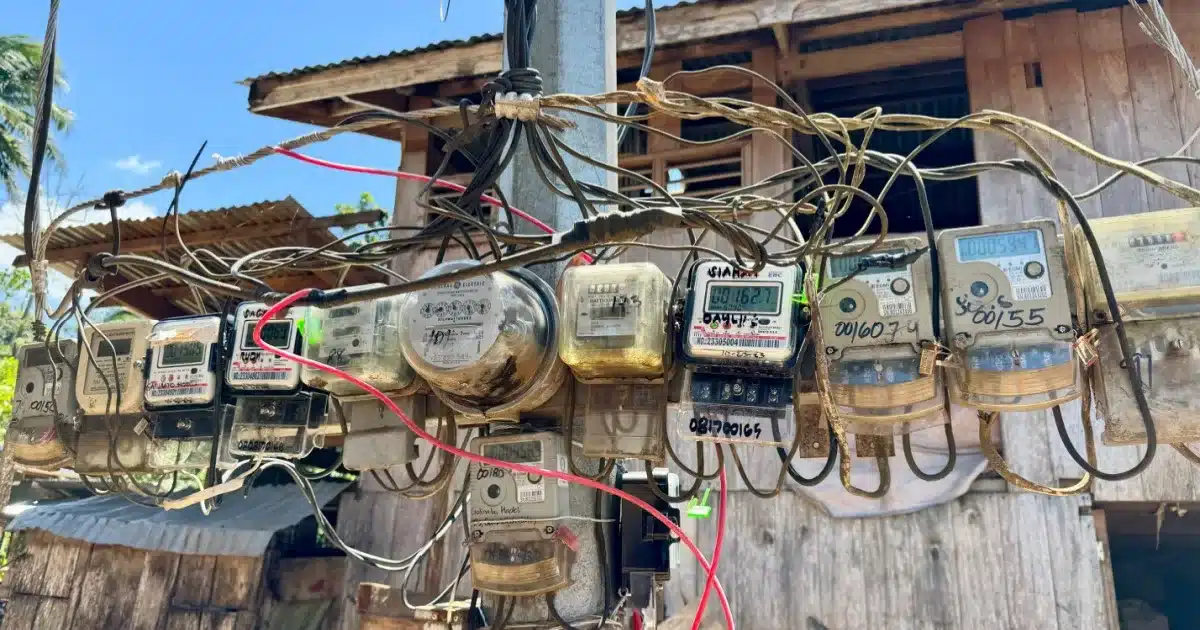
However, Committee on Energy Chairman and Palawan 2nd District Rep. Jose Alvarez drew a distinction between technical and non-technical system losses, saying charges linked to the latter could be removed outright. Non-technical losses stem largely from electricity theft and pilferage, while technical losses occur naturally as power moves through transmission and distribution networks.
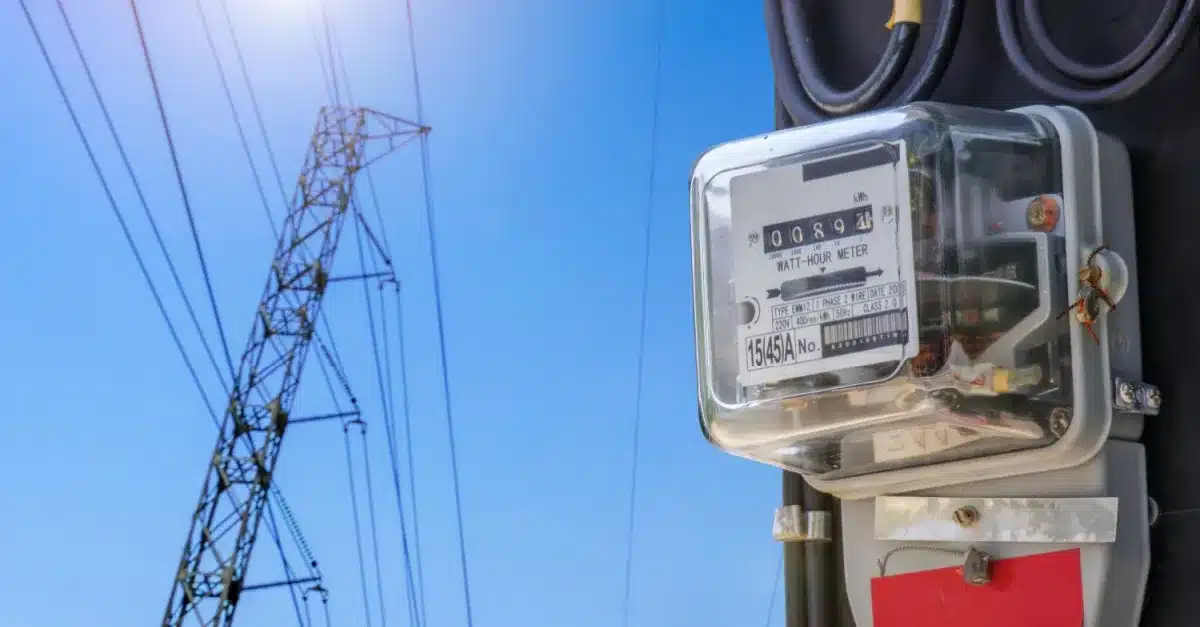
Consumers are estimated to pay ₱6.82 billion annually for electricity lost to theft, meter tampering and illegal connections. The problem remains widespread: in May 2026, National Electrification Administration (NEA) data showed that about 36, or 30%, of the country’s ECs exceeded the ERC’s allowable system-loss caps.
The data also identified 18 distribution utilities that breached their ERC-set feeder loss caps in 2025. The Zamboanga City Electric Cooperative (ZAMCELCO) recorded the largest above-cap recovery cost at ₱543 million, posting an 18.1% loss against an 8.25% limit. The South Cotabato II Electric Cooperative (SOCOTECO II) followed, with a 13.6% loss costing ₱410 million, while the Albay Electric Cooperative (ALECO) exceeded its 10.25% cap with a 21.5% loss rate, resulting in ₱374 million in above-cap recovery costs.
Meralco noted that its involvement could help bring the ECs’ double-digit system losses down to single digits. The utility attributes its own relatively low 5% loss rate to sustained investments in inspections, anti-pilferage measures and meter-related programs.
“If you are able to lower that [system loss] to even a single digit, that’s worth billions of pesos in savings for the consumers,” said Casanova. “You get reliable power, an efficient utility, and cheaper electricity.”
(Also read: Can Filipinos Afford Offshore Wind? The Hidden Cost of the Clean Energy Push)
The Case for Private Capital and Partnerships
ECs continue to rely heavily on government support, receiving roughly ₱2.8 billion a year through the NEA.
Recently, Congressman Antonio T. Kho called for urgent national government intervention to help financially distressed ECs, warning that mounting costs, including the 12% value-added tax and system losses, could further weaken their operations and push electricity rates higher for consumers. Among the proposed measures are government funding for the rehabilitation and expansion of power facilities, additional substations to reduce system losses, and possible debt condonation for struggling cooperatives.
Meanwhile, the government is allocating ₱7.5 billion to reduce nontechnical electricity losses, such as power theft and billing issues, while developing a separate plan to address technical losses. The first ₱4 billion phase aims to cut nontechnical losses by 25%.
Energy experts, however, pointed out that repeated government support for financially-distressed ECs have created complacency, reducing pressure on them to improve efficiency and address persistent losses on their own.
“The problem is that many of those cooperatives don’t even repay their loans,” pointed out Minimal Government Thinkers Bienvenido Oplas. “In effect, they are being bailed out and protected by the government.”
He proposed eventually transitioning ECs into corporations under the regulatory oversight of the Securities and Exchange Commission (SEC), rather than keeping them under the NEA.
For former ERC Chairperson Monalisa Dimalanta and Asian Institute of Management (AIM) Professor Ricardo Barcelona, the cooperative model can blur the line between being a customer and an owner. Members may have access to electricity but little meaningful financial stake or influence over how the utility is run. Reform could separate the right to receive power from ownership, allowing the utility to be governed and financed more effectively.
They wrote that a workable reform would protect consumers’ access to electricity while giving cooperative members transferable shares in the utility. The cooperatives could then operate as “corporations governed under the rules of the Securities and Exchange Commission, elect qualified boards under existing corporate governance standards, and hold those boards and officers accountable for turnaround, restructuring, merger, or sale decisions.”
That shift could also open the door to more than just new capital. Casanova said partnerships with Meralco could bring decades of distribution experience, smart-grid and SCADA technology, and specialized workforce training through the Meralco Power Academy. He also highlighted the company’s investment in developing technical expertise, including sending scholars abroad for graduate studies in nuclear engineering as Meralco explores potential future investments in nuclear power.
The issue extends beyond the financial health of individual ECS and points to a broader infrastructure gap. With the Philippines’ installed generating capacity at only around 30 to 31 gigawatts (GW), compared with Taiwan’s 61 GW, inadequate power infrastructure remains a constraint on growth. Inefficient electricity services and high power costs further discourage investment.
Proof of the broader economic slowdown came in the second quarter, when Philippine GDP growth eased to 2.3%, its weakest pace since the pandemic. Growth fell from 2.8% in the first quarter and 5.4% a year earlier, highlighting the mounting challenges facing the economy, according to the Philippine Statistics Authority.
That concern has also been echoed in the Senate, with Sen. Sherwin Gatchalian stressing the need to lower power costs. “If we want to revitalize our economy and give real financial relief to Filipino families and small businesses, we need to bring down the cost of electricity,” he said.
For consumers, the debate ultimately goes beyond who owns the utility. What matters is whether the structure can deliver the investment needed to reduce losses, strengthen networks and keep electricity reliable without shifting unsustainable costs onto households. Private capital is not a guarantee of better service, but for ECs unable to finance modernization on their own, it offers an alternative to continued dependence on public support.
This puts the spotlight on how electricity is distributed, particularly outside major urban centers. If some ECs lack the financial capacity to modernize their networks, bringing in private capital and technical expertise could be one way to close that gap. The question is no longer simply whether ECs should remain cooperatives, but whether their ownership and financing model is capable of supporting the economy they are now expected to power.
Sources:
https://tribune.net.ph/2026/08/22/co-ops-must-open-up-for-private-capital
https://mb.com.ph/2026/08/20/meralco-seeks-cooperative-capital-partnerships-to-cut-power-rates
https://www.capstone-intel.com/survey-power-disruptions-erode-public-trust-in-batangas-utilities/
https://mb.com.ph/2023/12/19/residents-seek-better-service-from-batelec-ii
https://company.meralco.com.ph/news-and-advisories/system-loss-faqs
https://mb.com.ph/2026/08/20/meralco-seeks-cooperative-capital-partnerships-to-cut-power-rates
https://tribune.net.ph/2026/07/31/marcos-demand-will-kill-co-ops