Table of Contents
In early July, the Northern Davao Electric Cooperative (NORDECO) said it would comply with the Energy Regulatory Commission’s (ERC) order to stop billing and collecting payments in areas covered by Davao Light’s expanded franchise, but maintained that the directive is temporary. The electric cooperative (EC) asserted that it would continue pursuing legal remedies over the transfer of its distribution assets to Davao Light.
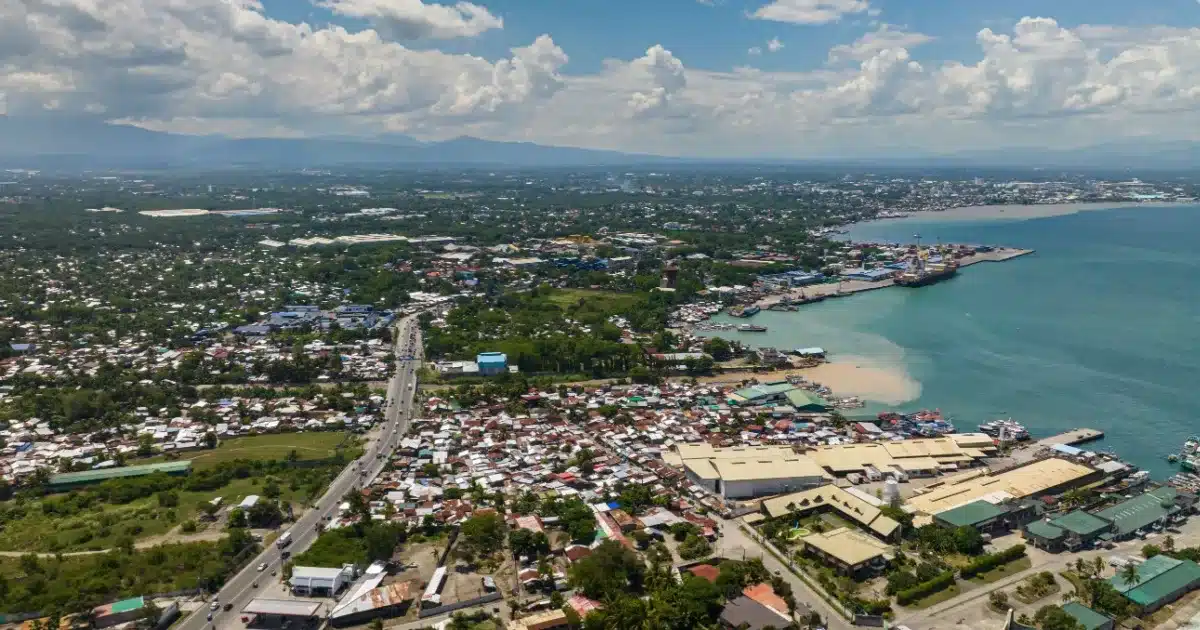
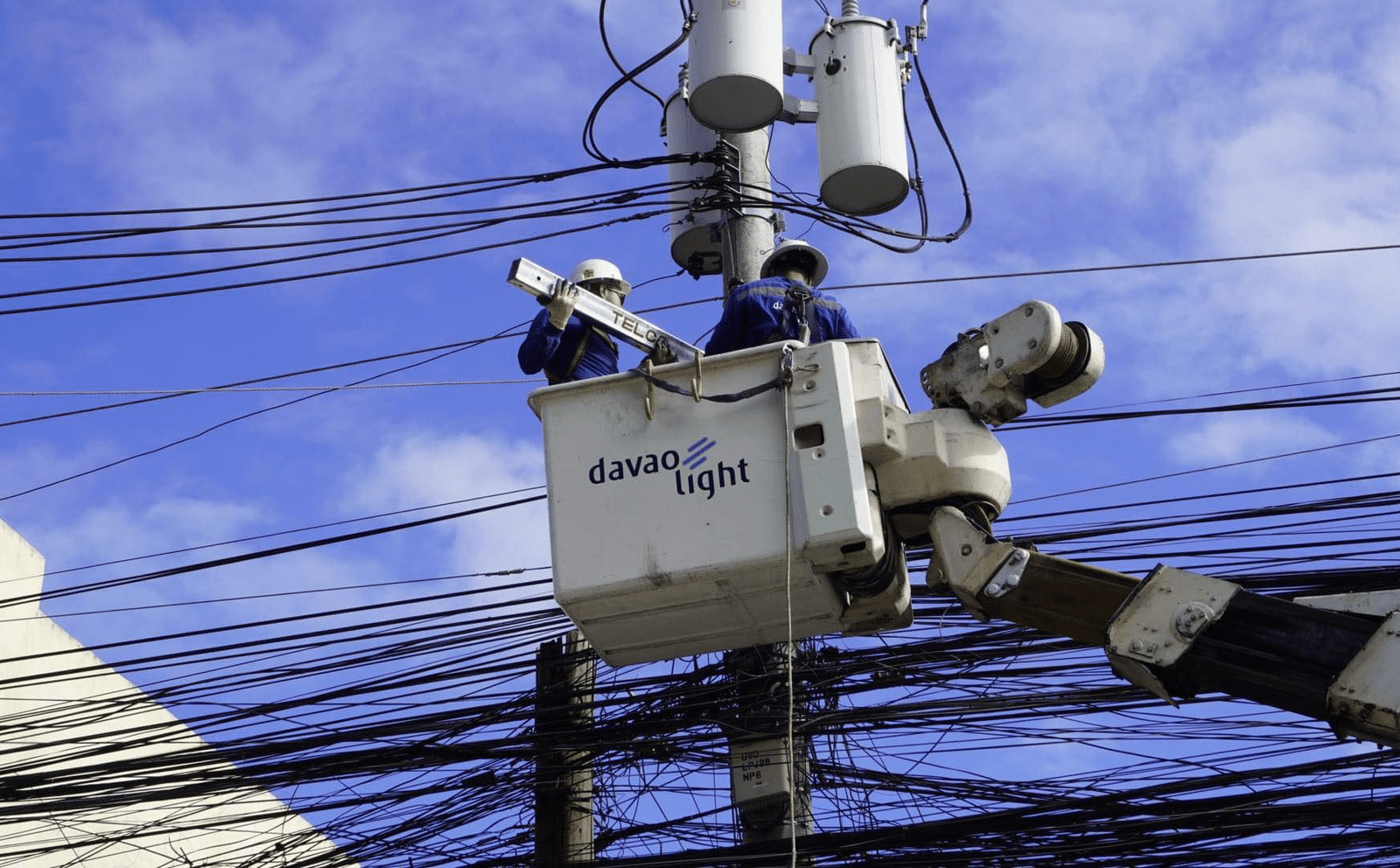
While the legal issues remain unresolved, NORDECO acknowledged its halted operations across several areas in Davao del Norte. These include Kapalong, San Isidro, Asuncion, New Corella, Talaingod, Tagum City, and the Island Garden City of Samal (Igacos), leaving the affected communities to be served under Davao Light’s expanded franchise.
However, NORDECO will still serve its member-consumers in 11 municipalities across Davao de Oro, which are not covered by the ERC order.
(Also read: Tantangan Solar Project Powers Up First Phase, Strengthens Mindanao Grid)
About the ERC’s Order
The ERC’s latest order formalizes Davao Light’s authority to serve, bill, and collect payments in the expanded franchise areas. The directive aims to prevent confusion and double billing, while requiring NORDECO to turn over consumer records and billing data to Davao Light within 15 days.
The cooperative must also assist in turning over metering and service records, with noncompliance potentially triggering a show-cause order.
The ERC stated that Davao Light is legally authorized to operate in the contested areas after securing a provisional certificate to provide electricity service and taking possession of the distribution assets through court-issued writs. It also noted that the Supreme Court has not issued any order suspending the implementation of Republic Act No. 12144, allowing the expanded franchise to remain in effect.
What began as a franchise expansion has evolved into a prolonged legal battle between Davao Light and NORDECO. After Republic Act No. 12144 took effect in 2025, both utilities laid claim to the same service areas, sparking disputes over electricity distribution, customer accounts, and control of power assets. The overlapping claims also fueled confusion among residents over which utility was responsible for providing service and collecting payments.
While it has complied with the ERC directive, NORDECO highlighted that the broader legal dispute is still pending. The cooperative plans to continue challenging the implementation of Republic Act No. 12144 before the Supreme Court.
The EC brought the dispute before the Supreme Court on May 26, seeking to halt the transfer of its assets in Tagum City.
NORDECO Continues Operations in Unaffected Areas
Amid the franchise dispute, NORDECO remains engaged in its rural electrification efforts in communities it serves. Senior board member Herv Zamora Apsay stressed that electrification remains a “commitment to communities that have long been left behind.” The EC also reported that it energized 23 sitios and puroks under its Sitio Electrification Program from June 4 to July 7.
During the July 1 energization of Bag-ong Pag-asa Village in Pantukan, Davao de Oro, Rep. Leonel Ceniza underscored the role of electricity in rural communities. He noted that power goes beyond infrastructure, describing it as a service that supports education, livelihood, safety, productivity, and community development.
Rising Electricity Costs in Davao City
Meanwhile, Davao City officials are pressing for action as consumers grapple with sharply higher electricity bills, with calls growing for regulatory measures, lower rates, and longer-term reforms to cushion households from further price increases.
During a privilege speech, Councilor Pamela Librado-Morata, who chairs the City Council’s Committee on Civil, Political and Human Rights, and Labor and Employment, flagged the increase in power costs.
Residential rates charged by Davao Light rose by nearly 35% in seven months, according to Morata, climbing from P9.71 per kilowatt-hour in December 2025 to P13.09 per kWh in July 2026.
The Davao Consumer Movement (DCM) warned that Mindanao households are being squeezed by higher grocery, transport, fuel, and electricity costs, leaving family budgets with less room to stretch. The group urged the government to address the problem through long-term measures, including a fuel price stabilization mechanism, lower or removed VAT on electricity bills, a review of charges passed on to consumers, and the development of new power generation facilities.
DCM’s call for relief from rising power costs appeared to find an echo in President Ferdinand Marcos Jr.’s State of the Nation Address on July 27. Marcos identified lower electricity prices as a priority and urged Congress to amend EPIRA to remove system loss charges, including VAT on these charges, from consumer bills.
System losses refer to electricity lost while being transmitted and distributed, whether through technical losses or non-technical causes such as power pilferage. The issue has long been flagged by the Cebu Electricity Rights Advocates (CERA), which noted that private utilities face a 5.5% system loss cap, while ECs can recover up to 12% from consumers—potentially adding to electricity costs.
To ease the impact of high electricity costs, Davao City lawmakers are pushing short-term measures, including a proposed Emergency Power Supply Agreement (EPSA) between Davao Light and Therma South Inc. Councilor Ragde Niño Ibuyan said the move could provide a backup against power plant outages and spot market price spikes.
Additionally, Councilor Danilo Dayanghirang proposed a four-point plan covering a temporary rate freeze, an independent billing review, flexible payment terms for hard-hit consumers, and greater use of localized power supply to reduce reliance on the volatile spot market.
Despite the focus on Davao Light, DCM’s analysis showed that higher residential power rates were a broader regional issue, with all four distribution utilities recording increases between December 2025 and June 2026.
While Davao Light posted the biggest rise, it still had one of the lowest rates at P12.30 per kWh in June, before another increase brought it to P13.09 in July. NORDECO remained the most expensive at P14 per kWh, followed by the Davao Oriental Electric Cooperative (DORECO) at P13.01, while the Davao del Sur Electric Cooperative (DASURECO) had the most stable rates.
DCM linked the increases largely to exposure to the Wholesale Electricity Spot Market, where prices can climb when supply tightens. NORDECO sourced about 78% of its power from WESM, compared with roughly 40% for Davao Light, 12.87% for DORECO, and just 0.53% for DASURECO. The figures suggest that utilities with greater access to longer-term power contracts tend to have more stable rates.
(Also read: DOE Steps Up Mindanao Electrification As Household Power Access Reaches 94.9%)
Can Davao Light Keep Its Promise In Challenging Times?
The case for Davao Light’s expanded franchise has always rested on more than reliable service; affordable electricity was a central part of the promise to consumers. Delivering on that promise, however, is becoming harder amid a volatile energy landscape. Power plants across Luzon, Visayas, and Mindanao were offline due to scheduled maintenance, unexpected outages, and the June 8 magnitude-7.8 earthquake, while tensions in the Middle East add another layer of uncertainty to energy costs.
The pressure is already being felt by households. Inflation in the Davao Region climbed to 8.1% in June 2026 from 7.8% in May, with electricity emerging as a major driver. Electricity prices posted a 24.8% inflation rate, sharply up from 3.2% a month earlier, according to the Philippine Statistics Authority XI.
To ease the impact of higher power costs, Davao Light sought regulatory approval to spread out the collection of additional generation charges over five months instead of passing the full amount on in a single billing period.
The utility also suspended service disconnections due to unpaid bills until October 2026 under the ERC’s extended consumer protection measures. The temporary relief applies to both residential and non-residential customers within its franchise area.
The transfer of NORDECO’s service areas to Davao Light may have settled the immediate question of who will operate the network, but it has not ended the bigger debate: whether consumers will ultimately benefit from the change.
Davao Light now carries the burden of proving that the expanded franchise was the right move. Beyond court decisions and regulatory approvals, its performance will be judged by the issues that matter most to households—reliable power, fair rates, and whether electricity becomes more affordable for the communities it serves.
Sources:
https://www.sunstar.com.ph/davao/nordeco-to-comply-with-erc-order-on-davao-light
https://www.pna.gov.ph/articles/1278788
https://www.philstar.com/business/2026/06/03/2532359/nordeco-keeps-fight-alive-davao-franchise
https://mb.com.ph/2026/07/28/davao-city-council-acts-vs-soaring-power-bills
https://www.sunstar.com.ph/davao/davao-light-suspends-disconnections-until-october-2026
https://www.mindanaotimes.com.ph/rising-prices/
https://www.sunstar.com.ph/davao/davao-light-suspends-disconnections-until-october-2026