Table of Contents
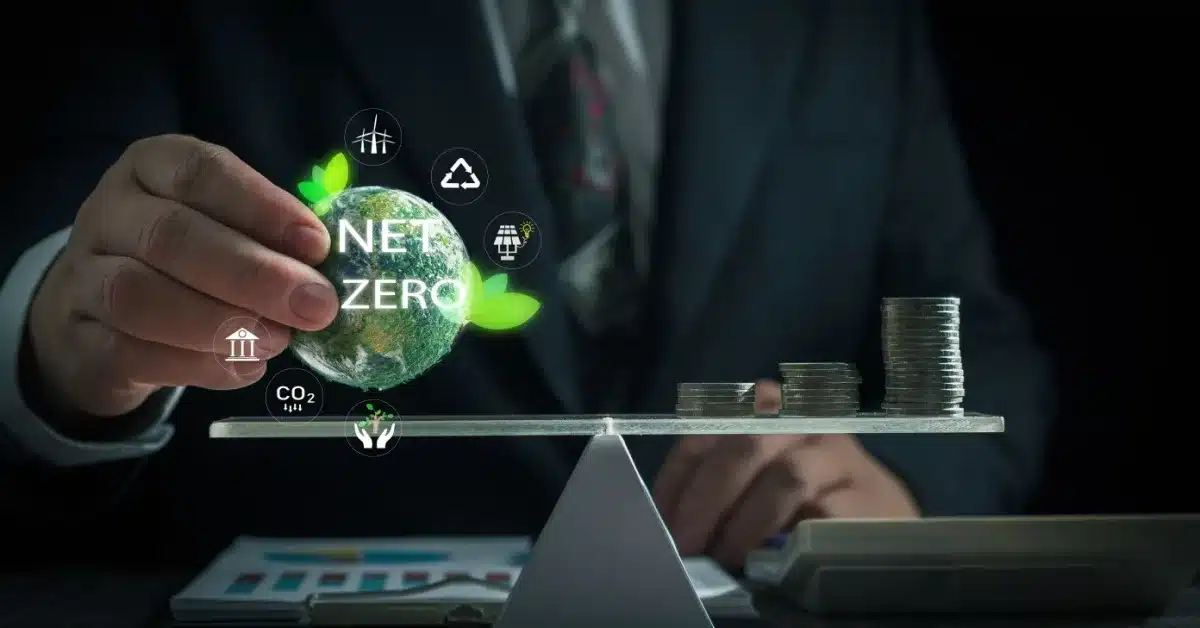
“Net zero” has become a defining term in global climate policy over the past decade. At its core, it refers to balancing greenhouse gas emissions released with those removed from the atmosphere, so the net addition of emissions is zero by a target year, typically 2050.
The concept gained traction following scientific research that showed stabilizing global temperatures requires such a balance between emissions sources and sinks, often through a mix of reductions and carbon removal approaches. This emphasis on net zero was reinforced by the Intergovernmental Panel on Climate Change’s (IPCC) 2018 report, which highlighted the role of net zero in limiting warming to around 1.5 °C.
Proponents argue that net zero offers a clear long-term goal for countries and companies, aligning expectations and investments behind decarbonization. Yet, critics contend that net zero has evolved into a mirage — a broad, loosely defined target that often masks the absence of concrete plans, realistic pathways, or meaningful accountability.
Net Zero and the Paris Agreement
The 2015 Paris Agreement under the United Nations Framework Convention on Climate Change provided the global framework that later anchored net-zero commitments. Nearly every country in the world, representing 195 Parties, agreed to pursue efforts to limit global warming.
Although the Paris accord itself did not mandate specific net-zero timelines, it implicitly set the stage by encouraging countries to adopt long-term strategies and nationally determined contributions (NDCs) consistent with deep cuts in greenhouse gas emissions. Limiting warming to 1.5 °C, scientists said, would require global emissions to reach net zero by around mid-century — effectively making net zero the logical endpoint for climate policy.
Net zero quickly became a shorthand for compliance with the Paris goals: a target that signaled ambition and seriousness in addressing the climate crisis. But critics argue that the Paris Agreement’s emphasis on flexible, nationally determined plans also opened the door to vague, unbinding net-zero pledges without enforcement mechanisms.
(Also read: Renewables at a Crossroads: Balancing Promise & Pitfalls in a Changing Energy Landscape)
Net Zero on Shaky Ground
While countries like Sweden, the UK, and Australia once set ambitious net zero targets, recent developments reveal widening gaps between their pledges and on-the-ground realities, driven by political shifts, economic pressures, and policy adjustments.
Sweden
What it promised: Sweden has one of the most ambitious legally binding climate goals in the world, aiming to achieve net-zero greenhouse gas emissions by 2045, five years earlier than the broader EU target. This commitment is rooted in Sweden’s Climate Act and climate policy framework, adopted by Parliament in 2017, which requires greenhouse gas emissions within the country’s borders to fall by at least 85 % below 1990 levels by 2045. After that, Sweden is meant to go beyond zero into negative emissions, absorbing more greenhouse gases than it emits through measures such as enhanced carbon sinks and technologies like bioenergy with carbon capture and storage (BECCS)
Current situation: Despite its ambitious framework and historical progress in reducing emissions, recent assessments suggest Sweden could struggle to meet its own net-zero and EU-aligned targets under current policies. Reviews by the Organization for Economic Cooperation and Development (OECD) have raised concerns that policy shifts, especially in areas like transport, may make it harder to stay on track. One key factor has been the reduction in petrol taxes, a central election pledge implemented by Sweden’s right-wing government in its September 2023 budget.
The United Kingdom
What it promised: The UK originally enshrined a net-zero greenhouse gas emissions target by 2050 into law under the Conservative government in 2019. This made the UK one of the first major economies to adopt such a long-term target.
Current situation: In September 2023, the UK government reaffirmed its net-zero-by-2050 target, but delayed the ban on new petrol and diesel cars to 2035 and slowed the phaseout of older heating systems, to “ease the financial burden on British families.” However, Shadow Net Zero Secretary Claire Coutinho accused the current net zero policy of misleading the public and hurting economic prospects. Coutinho has claimed net-zero policies could make the country poorer and has suggested reversing net-zero legislation altogether. She has described some elements of current policy as “leading Britons down the garden path” and has criticized proposals to cut household bills under the net zero banner as unrealistic.
Australia
What it promised: Australia included a goal to reach net-zero emissions by 2050 in its updated NDCs in 2021. The target applies economy-wide and covers all greenhouse gas emissions, but excludes international aviation and shipping. Australia’s long-term emissions plan also indicates that it will rely on domestic and international offsets to deliver around 10% of the reductions needed to reach net zero by 2050.
Current situation: Australia’s net-zero target has been formally abandoned by key political parties amid growing political and economic pressure. The National Party voted unanimously to scrap the commitment, arguing that Australia’s share of global emissions is relatively small and that climate policy should prioritize affordable energy, economic growth, and regional interests rather than strict long-term targets. The Liberal Party followed suit, emphasizing that “energy affordability” and reliable supply should outweigh legally binding emissions deadlines and that emissions should be reduced in a flexible, technology-led way rather than through rigid targets. This decision was framed as a response to voter concernsover high household energy costs and economic competitiveness.
France
What it promised: France formally committed to carbon neutrality by 2050 through national legislation passed in 2019, positioning the goal as a cornerstone of its long-term climate policy. The legislation strengthened France’s climate ambitions by increasing its goal to cut fossil fuel consumption by 40% by 2030, up from the earlier 30% target.
Current situation: In 2023, France produced about 12.4% of the EU’s net greenhouse gas emissions. While total emissions fell by 31.2% between 2005 and 2023, the country’s land-use and forestry carbon sink shrank by more than half, weakening its net gains. To meet the EU’s 55% net reduction target, France would need to cut emissions by around 5% annually through 2030 and rebuild its carbon sink.
Is Net Zero Good for the Philippines?
In the context of the Philippines, net zero remains largely unadopted and debated. The country has no formal net-zero commitment at the national level. Climate advocates have noted the absence of a clear declaration on net zero, arguing that formal commitments could help coordinate climate action and attract finance.
“It would have been better if, as a country, you commit, and then everything follows,” stated Net Zero Carbon Alliance (NZCA) Executive Director Allan Barcena. “Other sectors like energy, agriculture, the private sector, private companies, and the academe will all follow your commitment.”
However, the Department of Energy (DOE) emphasized that the Philippines is already advancing its climate goals through renewable energy development.
“We have a national target in a sense… We do not need to commit to any other country (regarding net-zero targets),” asserted DOE Secretary Sharon S. Garin. “We decide ourselves what our targets are.”
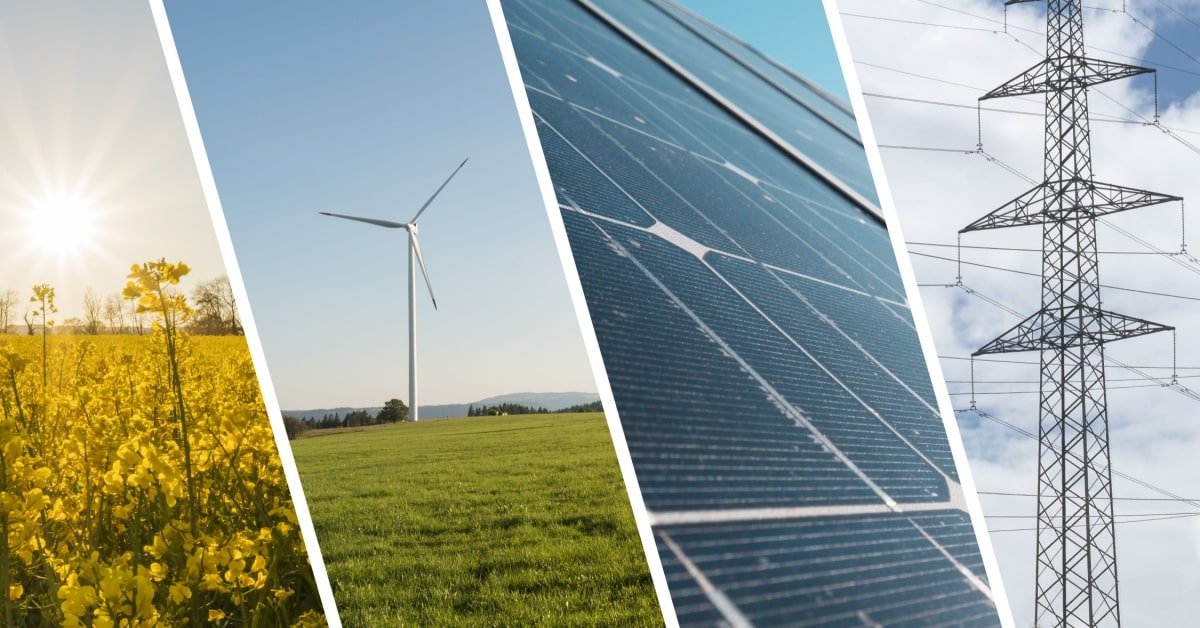
Under its NDC, the Philippines has pledged to cut greenhouse gas emissions by 75% by 2030. Complementing this, the government aims to increase renewables to 35% of the energy mix by 2030 and 50% by 2040.
The Philippines could take a page from Australia’s approach. Nationals leader David Littleproud has highlighted that Australia accounts for just 1% of global emissions, calling it a “small amount of the total emissions globally.” The Philippines’ contribution is even smaller, at roughly 0.5% of global carbon emissions.
The contrast becomes starker when comparing the two economies. Australia’s $1.76 trillion GDP ranks it 14th globally, while the Philippines’ $462 billion economy sits much lower at 35th. Australia is a high-income, resource-driven economy, whereas the Philippines remains an emerging market. For a developing country like the Philippines, a heavy reliance on predominantly intermittent renewable energy could threaten economic growth and push electricity prices higher, highlighting the need for a balanced, pragmatic energy strategy.
DOE echoes the sentiment, noting that while coal still plays a major role in the Philippines’ energy mix, the country’s overall electricity generation and greenhouse gas emissions remain modest compared with larger emitters such as China and Indonesia. “Therefore, the Philippines cannot be reasonably compared to these larger economies, which have different energy strategies and infrastructures adapted to their specific demographic and economic conditions,” the agency stated.
Manila Times columnist Ben Kritz frames the issue in terms of “subsistence emissions” versus “luxury emissions,” underscoring the stark contrast between developing nations and wealthy countries. While Filipinos are still striving to secure basic electricity access, rich nations focus on decarbonizing data centers, air travel, and other high-carbon activities. On an equitable scale, the Philippines faces a carbon deficit relative to its developmental needs.
He wrote, “Energy is the linchpin of development here, as it is in most places, thus in order to make the biggest dent in poverty reduction and overall economic standards, the Philippines must focus on building its energy security — that daunting balance of accessibility, reliability, affordability and sustainability.”
Pursuing a net-zero target for the Philippines misses the point and risks harming national interests. The country’s share of global greenhouse gas emissions is minimal, meaning that even a complete halt to domestic fossil fuel use would have virtually no impact on global climate extremes. Typhoons, floods, and other weather disasters that batter the archipelago are not the result of local coal-fired plants or other emission sources.
Focusing on an abstract global target instead of practical energy solutions diverts attention from urgent development needs, threatening economic growth, public welfare, and the country’s ability to build resilience against the climate threats it actually faces.
“Harmful, because following the net zero, “we can power the entire country with renewable energy now” narrative would stifle growth — the growth the country needs to be able to build resiliency, and adapt to a changing climate the Philippines is realistically powerless to affect,” declared Kritz.
(Also read: Why Coal Still Matters for Energy Security & Affordable Electricity)
Net Zero at the Expense of the Poor
While climate activists are quick to highlight the Philippines’ net zero declaration and continued reliance on coal, comparing the country to industrialized nations is both unfair and risky. Such pressure could undermine development objectives, particularly given the scale of domestic challenges: in 2023, 17.54 million Filipinos lived in poverty, and self-reported hunger rose to 16% in late 2025, up from11% the previous quarter.
Furthermore, roughly 1.6 million Filipino households still lack dependable electricity, while countless others struggle with frequent outages that disrupt work, education, and daily life. Power costs in the Philippines are already among the highest in Southeast Asia, and policies that restrict reliable, dispatchable energy too soon risk driving prices even higher. For low-income families, these rising costs act like a hidden tax, hitting those least able to pay and deepening poverty instead of supporting economic progress.
Power interruptions in the Philippines inflict serious economic damage. A 2023 study by the Philippine Institute for Development Studies (PIDS) estimated that asingle five-hour blackout can cost the economy around ₱556 million. These disruptions ripple through businesses, factories, and essential services, demonstrating that reliable electricity is vital for both daily life and broader economic growth. The findings make clear that energy stability is a fundamental driver of development, not merely a convenience.
Bjorn Lomborg, president of the Copenhagen Consensus, has repeatedly challenged prevailing climate strategies as both costly and largely ineffective. He warns that attempting to fully implement the Paris Agreement by 2030 could demand between $819 billion and $1.89 trillion annually, yet yield only about a 1% reduction in the emissions cuts needed to stay on a 1.5°C pathway.
Lomborg notes the stark inefficiency of these measures, writing that governments are “spending large sums of money in cutting very little emissions, mostly in rich world countries.” He argues that this approach not only offers limited climate benefits but also risks endangering the world’s poor by diverting resources away from more pressing development challenges. “This is going to harm the poor, both in the rich world and poor world,” he cautions.
Along the same vein, Microsoft co-founder and climate advocate Bill Gates has stressed that improving human welfare should take priority over abstract emissions targets. While recognizing that the poorest populations are among the most vulnerable to climate-related risks, Gates underscores that urgent human needs remain rooted in basic development challenges. “The biggest problems are poverty and disease, just as they always have been,” he says, highlighting the enduring importance of investments in health, education, and living standards over rigid climate mandates.
Lomborg further criticizes the assumption that climate change is an immediate existential threat to developing nations. Surveys from multiple African countries reveal that local populations place far greater urgency on concerns such as access to education, employment opportunities, healthcare, and infrastructure, while climate change ranks significantly lower. “Green campaigners insist that emissions cuts must come first for the poor — when what they really need are jobs, food, medicine, and an escape from poverty,” Lomborg points out.
His argument underscores a broader principle: resilience to disasters stems from wealth, and wealth in turn depends on access to reliable energy. Countries that remain impoverished are far more vulnerable to typhoons, floods, and extreme heat than nations that prioritize economic growth first and address emissions later.
Take the UK, for example. It has a high-income economy with a $3.96 trillion GDP, but is already grappling with the economic consequences of pursuing a legally binding net-zero target. After warning that current policies are “making the country poorer”, Coutinho has vowed to “reverse all net zero legislation.”
Analysis by the National Energy System Operator (NESO) suggests Britain could save £14 billion ($18 billion) annually by abandoning its 2050 net zero commitment, while the government’s current plan could add £500 ($678) per household per year compared with a slower approach.
If net zero threatens the wealthier UK, a comparable approach in the Philippines could exacerbate hardship and stall development on a much larger scale.
Net Zero’s Future — Vision or Illusion?
The net-zero movement emerged from well-intended scientific goals aimed at stabilizing global temperatures and limiting climate impacts. It became woven into global climate diplomacy through agreements like the Paris Agreement and embraced as a signal of climate ambition by countries and corporations worldwide.
Yet, as the world confronts economic realities, technological uncertainties, and equity dilemmas, the net-zero agenda has revealed significant limitations. Some countries are questioning or abandoning net-zero commitments; others adopt them in ways that lack legal teeth or fail to translate into meaningful action. Meanwhile, developing countries face difficult choices about balancing climate aspirations with pressing growth needs.
For the Philippines, the absence of a formal net-zero pledge reflects broader concerns about feasibility, cost, and alignment with national priorities. Critics argue that energy security, economic development, and poverty reduction should take precedence over abstract global targets without clear benefits or fair financing.
Ultimately, the net-zero debate raises a fundamental question about climate policy: should nations pursue broad, long-term ideals with uncertain outcomes, or focus on pragmatic strategies tailored to their circumstances, balancing growth, equity, and environmental stewardship? For the Philippines, the answer is straightforward: it cannot afford such uncertainty.
Sources:
https://en.wikipedia.org/wiki/Net-zero_emissions
https://unfccc.int/process-and-meetings/the-paris-agreement
https://www.gbnews.com/politics/ed-miliband-accused-leading-britons-down-garden-path-net-zero-policy
https://www.euronews.com/2019/06/27/france-sets-2050-carbon-neutral-target-with-new-law
https://www.europarl.europa.eu/thinktank/en/document/EPRS_BRI%282024%29767181
https://climateactiontracker.org/countries/australia/2023-12-11/targets
https://www.abc.net.au/news/2025-11-02/nationals-formally-abandon-net-zero-by-2050/105962162
https://www.abc.net.au/news/2025-11-13/liberals-ditch-net-zero-commitment/106003712
https://www.philstar.com/business/2024/09/23/2387184/philippines-lacks-net-zero-commitments
https://georank.org/economy/australia/philippines
https://pia.gov.ph/press-release/poverty-rate-down-to-15-5-percent
https://www.pna.gov.ph/opinion/pieces/926-impact-of-high-energy-costs-on-theeconomy
https://qa.philstar.com/business/2024/07/04/2367472/ripple-effect-reliable-electricity-service
https://www.sciencedirect.com/science/article/pii/S0040162520304157
https://lomborg.com/news/current-climate-policy-wishful-thinking
https://www.gatesnotes.com/home/home-page-topic/reader/three-tough-truths-about-climate
https://www.chinadaily.com.cn/a/202511/11/WS69128168a310fc20369a44e4.html