Table of Contents
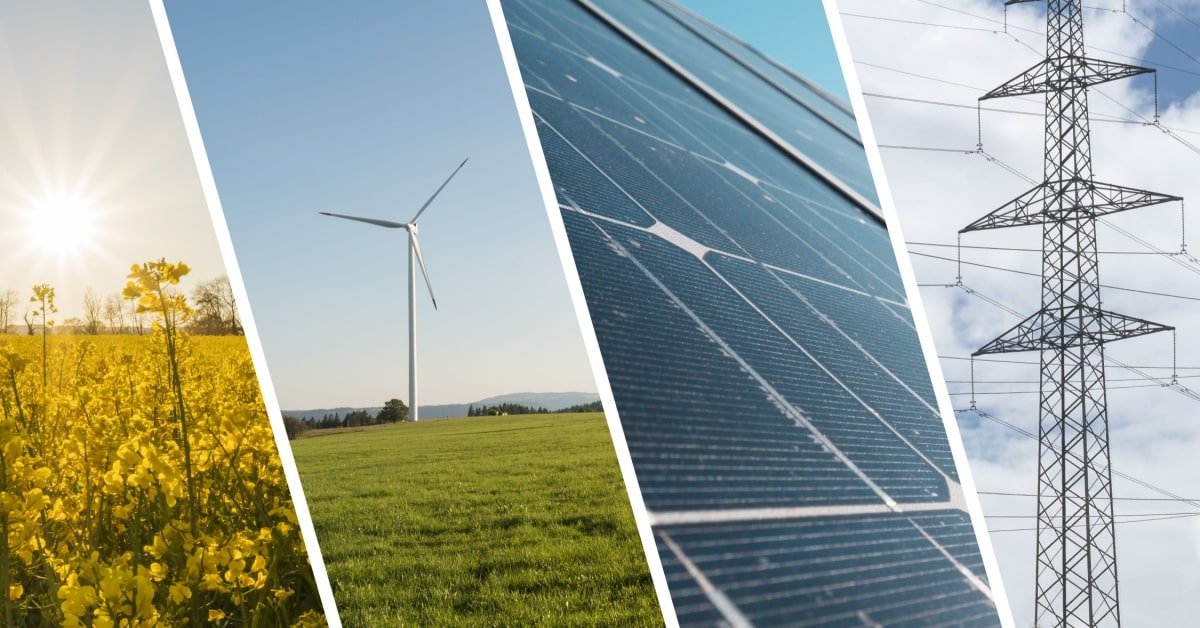
Globally, renewables are rapidly growing. By the end of 2024, nearly half of the world’s electricity capacity (46%) came from renewable sources, including solar, wind, hydro, geothermal, and biomass. Global renewable installations reached around 585 gigawatts (GW) that year, with solar and wind driving the vast majority of new additions, accounting for 92.5 % of all power capacity added worldwide.
In the Philippines, renewable energy (RE) made up roughly32% of total installed power capacity as of mid-2025, with continued investments helping to expand that share. Government targets aim to raise renewables to around35% of capacity by 2030 and eventually50% by 2040 under long‑term energy planning.
The push for renewables is part of the National Renewable Energy Program (NREP) and broader energy planning, which aims to enhance energy security, sustainable development, and climate change mitigation while reducing dependence on imported fossil fuels. Renewables also seek to address economic concerns by diversifying energy sources, reducing exposure to volatile global fuel prices, and promoting stable long‑term cost structures.
(Also read: Powering Progress with Purpose in 2026 and Beyond)
Green solutions, gray areas
However, a closer look at the promises of renewables reveals a more complex picture — one where well‑intended environmental zeal can collide with economic realities and implementation challenges. While RE offers a pathway to diversify the Philippines’ energy mix, pursuing renewables too aggressively without adequate planning, infrastructure, and regulatory coordination can create new headaches.
These tensions are particularly significant for the Philippines, an emerging economy that is also among the most climate-vulnerable countries in the world. This makes the debate over how fast and how far the country should pursue RE not just a technical or ideological issue, but a critical national conversation about balancing environmental responsibility with economic resilience and consumer protection.
This section unpacks the environmental benefits of RE alongside the counterpoint — the practical, economic, and system-level challenges that shape how feasible the transition truly is, particularly for the Philippines.
- The Philippines on the 1.5°C path
A Climate Analytics study says the Philippines cannot stay within the 1.5°C climate target unless coal plants are shut down by 2035 and gas-fired facilities are largely phased out within the following decade.
Even government officials have embraced the Philippines’ responsibility in the global push for green energy. Former Department of Natural Resources (DENR) Secretary Maria Antonia Yulo‑Loyzaga noted, “Aligning our actions with the goals set in the Paris Agreement helped us recognize that transitioning to a low-emissions economy is not merely a policy objective but a moral imperative…”, adding that such an approach supports “the promise of a sustainable future.
However, context matters: according to the 2023 European Commission Emissions Database for Global Atmospheric Research (EDGAR), the Philippines accounts for only 0.5 % of global greenhouse gas emissions. By comparison, China produced 29.2 % of global emissions in 2022, while Indonesia contributed 2.3 %, highlighting the relatively small role the Philippines plays in the world’s overall carbon footprint.
This means that eliminating domestic emissions would not shield the country from climate impacts, because climate change is driven by global emissions. Focusing solely on national reductions risks a “genuine but insignificant cause” fallacy, treating a real but tiny contributor as if it could solve the problem alone. Meaningful mitigation requires coordinated action by major emitters, and the Philippines’ net-zero efforts will have no significant impact on global climate outcomes.
- Climate deaths drive urgent clean energy action
The Philippines ranked among the top 10 countries most affected in the 1995–2024 Climate Risk Index by Germanwatch, experiencing 371 extreme weather events that caused around 27,500 deaths and over ₱2 trillion in economic losses. The report highlights the escalating toll of climate-driven disasters and the urgent need for stronger emissions cuts and adaptation measures.
Climate groups agree that cutting emissions is central to saving lives. In September 2025, as world leaders convened at the United Nations (UN) General Assembly in the US, the Philippine Movement for Climate Justice (PMCJ) joined the global call to end fossil fuels. PMCJ Visayas Coordinator Estela Vasquez stressed the urgent need to retire coal plants. “Coal and fossil fuels destroy not just the environment but also people’s health,” she said.
Critics of an emissions-first approach argue that prioritizing long-term climate targets can also put humanity at risk. Copenhagen Consensus President Bjorn Lomborg contended that many climate policies cost far more than the gains they deliver, noting that projected damages from coastal flooding are often overstated because adaptation is overlooked. “Because it ignores adaptation, this description exaggerates the problem by up to two thousand times,” he explained, stressing the importance of practical measures that reduce real-world risks.
COP30 negotiators agreed to mobilize at least $1.3 trillion annually by 2035 for climate action, yet questions remain about its real impact on saving lives. Lomborg pointed out that billions in developing countries face more urgent threats than minor long-term temperature targets, advocating for investments in health, nutrition, and education that could save over 4 million lives each year.
Microsoft co-founder Bill Gates echoed this perspective, noting that while climate change affects the poor, “the biggest problems are poverty and disease, just as they always have been.” US Treasury Secretary Scott Bessent similarly called for shifting World Bank funds from climate projects toward expanding affordable energy, combating poverty, and driving economic growth, emphasizing that improving human well-being should remain the central priority alongside environmental goals.
- RE’s promise of affordable power
According to the Department of Energy (DOE), boosting the share of RE in the Philippines’ power mix represents a strategic move away from costly, volatile fossil fuels and promises to lower electricity prices over time. “We’re focused on ensuring that the transition delivers on its promise of affordability, reliability, and energy security,” said DOE Undersecretary Rowena Cristina Guevara.
But it is RE that will have Filipinos starting in 2026, reaching deeper into their pockets for electricity. Starting this January, the Energy Regulatory Commission (ERC) will roll out the Green Energy Auction allowance (GEA-All), a per-kWh charge of ₱0.0371 collected from all grid users to compensate renewable developers.
Projected to raise ₱5.7 billion annually, the fee will show up as a separate line item on bills, including those from major distributors like Meralco.
Compounding the RE affordability challenge is the introduction of GEA‑5, which focuses on offshore wind (OSW) capacity. The ERC reports OSW price levels of around ₱14 per kWh, nearly three times higher than some solar power purchase agreements, which have been signed at about ₱4.50 per kWh. This will result in higher bills for Filipinos, who typically pay 30 to 40% of their earnings for electricity.
“How can anyone expect us to stomach a power capacity addition that will compel consumers to pay a gut-wrenching ₱14 per kWh for offshore wind?” asserted Manila Bulletin’s Myrna Velasco. “This energy source is being served like a luxury entrée to a populace already choking on financial survival.”
While renewables may lower electricity costs in the long run, the short-term impact on low-income families could be harsh. Rappler’s Val Villanueva warns that spreading OSW costs over time offers little relief, as households will still shoulder higher generation charges, added system fees, and the expenses of connecting these projects to the grid.
“Filipinos already face among the highest electricity rates in Asia,” reminded Villanueva. “Careless OSW timing can push that burden even higher. This is the price impact that households cannot afford — and one that the government can still avert.”
(Also read: Discarded Solar Panels: The Hidden Threat to Our Planet)
Navigating the renewable dilemma
RE is a worthy endeavor, but it also carries its own costs — loss of fishers’ livelihoods because of OSW, habitat disruption from large-scale infrastructure, and mining impacts for solar and wind materials — while asking Filipinos to pay more today for a future that is still uncertain.
Other countries that have gone ahead with the transition are feeling the strain. For instance, the Netherlands’ electricity grid is buckling under its RE boom, as demand and supply grow faster than infrastructure can adapt, creating bottlenecks that could take billions of euros and several years to resolve.
Should the Philippines turn a blind eye to such developments? As a Daily Tribune editorial commented, “For a developing nation like the Philippines to be forced to get into the expensive grid adjustment would be nothing less than criminal. While enormous resources are lost to the corrupt practices of its government leaders, the shift to RE threatens to add roadblocks to development through unnecessary expenses.”
Pursuing RE is undeniably a worthy goal. Yet, its benefits are most meaningful when pursued with eyes wide open, fully aware of the economic, technical, and environmental costs.
Balance, therefore, must be the guiding principle. The Philippines should prioritize a diversified energy mix that pairs renewables with reliable conventional sources while investing in grid resilience and careful project sequencing. Policymakers should phase in new technologies gradually, target the most cost-effective projects first, and ensure that the poorest consumers are shielded from disproportionate price shocks.
By combining ambition with pragmatism, the country can advance toward a cleaner energy future without succumbing to the pitfalls of a rushed transition.
Sources:
https://www.pna.gov.ph/index.php/articles/1263768
https://legacy.doe.gov.ph/national-renewable-energy-program
https://www.unicef.org/philippines/reports/climate-landscape-analysis-children-philippines
https://denr.gov.ph/news-events/ph-new-zealand-align-on-climate-change
https://www.sciencedirect.com/science/article/pii/S0040162520304157
https://news.un.org/en/story/2025/11/1166433
https://www.gatesnotes.com/home/home-page-topic/reader/three-tough-truths-about-climate
https://www.arabnews.com/node/2620993
https://mb.com.ph/2025/12/12/erc-sets-new-power-fee-at-00371kwh-to-fund-renewable-projects