Table of Contents
An international marine expedition has identified the southern portion of the Philippine Sea as a promising site for ocean-based renewable energy development, while also uncovering previously unmapped faults off eastern Palawan that may have implications for geological assessments in the area.
Researchers from the University of the Philippines Diliman Marine Science Institute (UP MSI), in collaboration with the University of California, Santa Cruz, and Mindanao State University–Naawan, reported that the southern Philippine Sea exhibits a significant surface-to-deep temperature difference suitable for Ocean Thermal Energy Conversion (OTEC).
Strong Thermal Presence
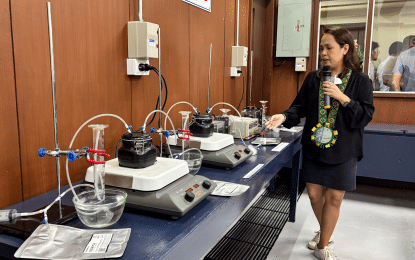
Dr. Charina Lyn Amedo-Repollo, who leads the Physical Oceanography and Observation Laboratory, said the area demonstrates a “strong surface-to-deep temperature contrast,” meeting the thermal requirement for OTEC operations.
“The strong surface-to-deep temperature contrast observed in the southern Philippine Sea meets the thermal requirements for OTEC, indicating high potential for continuous baseload renewable energy, with additional applications for desalination, and seawater cooling,” Amedo-Repollo said.
The team observed that the critical 20-degree Celsius temperature difference between warm surface waters and colder deep waters occurs at a depth of around 200 meters in the southern Philippine Sea. This is significantly shallower than in many other tropical regions, where similar temperature gaps are typically found at depths of up to 1,000 meters or more.
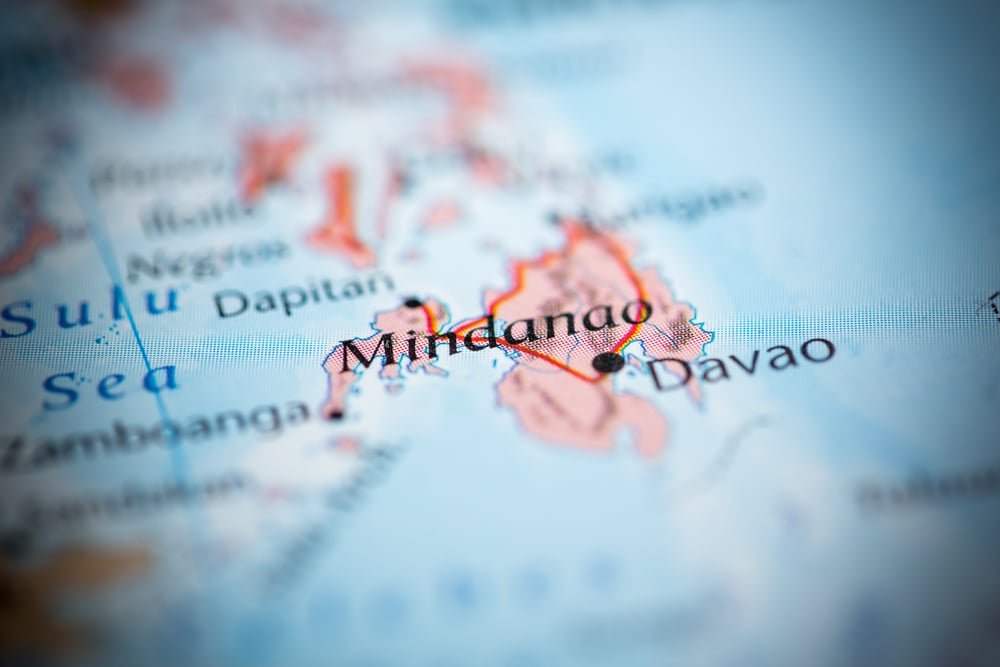
Amedo-Repollo attributed the thermal structure to large-scale ocean circulation, including the southward-flowing Mindanao Current and the northwesterly-flowing Mindanao Undercurrent along the eastern coast of Mindanao. The open-ocean setting, exposed to solar heating, further contributes to the temperature gradient.
Deep-Sea Discoveries
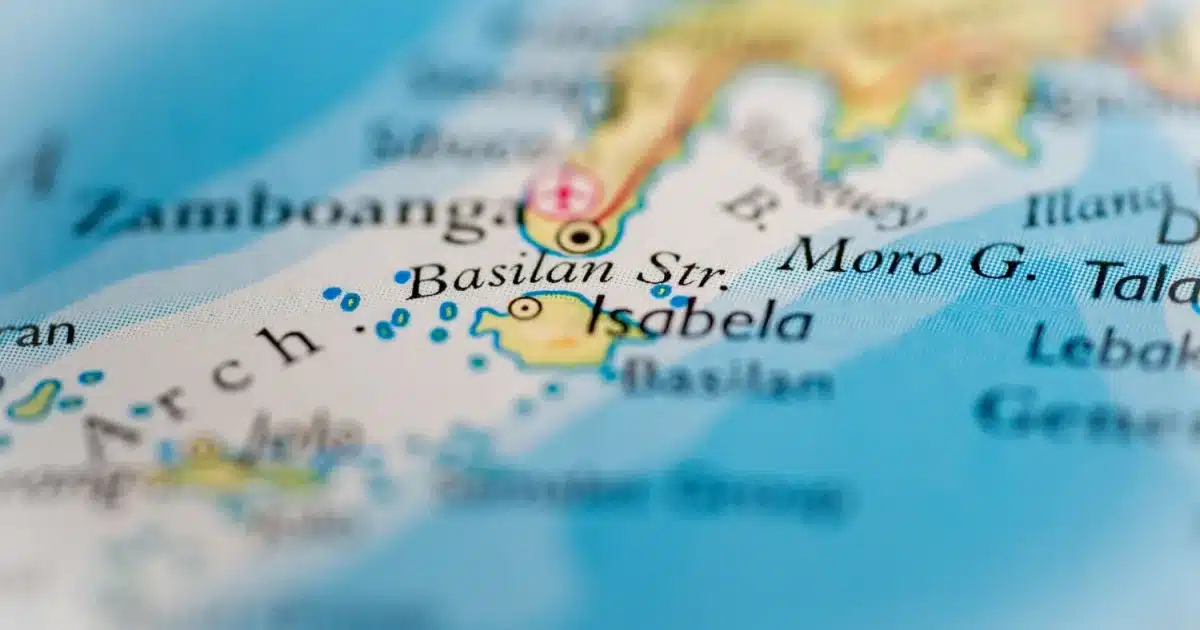
The expedition also identified the Basilan Strait and the Sangihe Arc as natural hotspots for internal waves due to their steep and complex seafloor topography. These conditions enhance ocean mixing and help sustain marine life beneath the surface.
Scientists documented life forms at a volcanic feature in the Celebes Sea south of Balut Island. According to Dr. Fernando P. Siringan, volcanic edifices can foster unique marine ecosystems that may yield bio-compounds with potential industrial and pharmaceutical applications.
The mission marked the first time water samples were collected from a depth of 5,200 meters in the Celebes Sea.
Newly Mapped Faults
In addition to energy and oceanographic findings, researchers discovered previously unmapped faults off eastern Palawan. One fault along the continental slope shows an estimated displacement of about 10 meters. Another series of faults extends approximately 20 kilometers along the projected extension of the Ulugan Bay Fault, cutting through sediment layers west of Palawan Island.
The findings are consistent with earlier mapping efforts by French and German scientists and may help explain the magnitude 5.1 earthquake that struck Palawan on June 11, 2024, which the Philippine Institute of Volcanology and Seismology linked to a known fault in the area.
Siringan said the newly identified structures could be related to volcanic features in the Sulu Sea and emphasized the need to reassess Palawan’s geology, particularly as the province is being considered as a potential site for a nuclear power plant.
Source:
https://www.gmanetwork.com/news/scitech/science/977739/renewable-energy-philippine-sea/story