Table of Contents
The National Electrification Administration (NEA) released ₱2.8 billion in state-funded loans last year to support 45 electric cooperatives (ECs) across the country, aiming to sustain power distribution operations and accelerate rural electrification efforts.
The total amount marks a 55-percent increase from the ₱1.8 billion in loans extended in 2024, according to NEA data. The funds were allocated mainly for capital expenditures, working capital needs, and rehabilitation of energy infrastructure damaged by past typhoons.
Capital and Working Capital Financing
Of the total ₱2.8 billion, about ₱1.7 billion went to capital expenditure projects of 34 ECs. 15 of which were in Luzon, eight in the Visayas, and 11 in Mindanao.
Another ₱956 million was processed as working capital loans for 11 ECs serving power consumers in Albay, Cagayan de Sulu in Tawi-Tawi, Camarines Sur, Cotabato, Negros Oriental, northern Negros, Pampanga, Pangasinan, Sultan Kudarat, and Tarlac.
“The NEA under the current administration provides financial assistance to its partner ECs through its enhanced lending program. The mechanism aims to ensure their operations will continue for the benefit of their member-consumer-owners,” the agency said in a statement.
Calamity Loans for Typhoon-Affected Areas
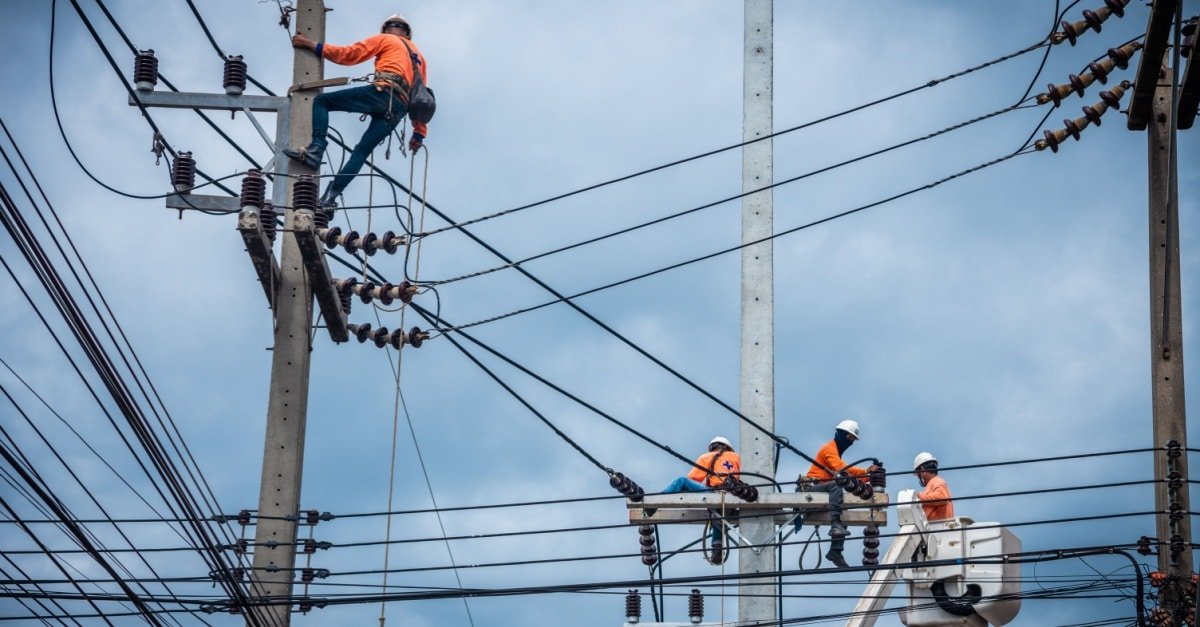
In addition to operational funding, ₱142.4 million in calamity loans was released to help ECs restore vital energy infrastructure damaged by Super Typhoon Odette in 2021.
The funds included ₱13.3 million granted to Bohol I Electric Cooperative Inc. (BOHECO I) to continue rehabilitating the Janopol mini-hydropower plant, as well as financing for Surigao del Norte Electric Cooperative (SURNECO) to retrofit its distribution lines.
NEA noted that such funds are vital for ECs in disaster-prone regions, allowing them to restore power quickly and strengthen systems against future calamities.
Expanding Rural Electrification Coverage
The NEA, which supervises 121 ECs nationwide, remains the government’s lead agency in implementing rural electrification. Administrator Antonio Mariano Almeda said the agency expects to increase electrification coverage to about 94 percent this year.
Priority areas include geographically isolated and underserved communities in Mindanao, northern Luzon, and the Negros Island Region. The agency emphasized that continued access to financing would enable ECs to meet growing electricity demand while improving reliability in rural networks.
Energy analysts point out that sustained infrastructure lending supports economic development by improving energy access in remote areas and reducing dependence on private power suppliers.
Calls for Oversight Amid Rising Power Prices
Meanwhile, the National Association of Electricity Consumers for Reforms Inc. (Nasecore) has urged the NEA and the Department of Energy to address rising prices in the Wholesale Electricity Spot Market (WESM).
The group said delays in reviewing emergency power supply agreements have forced some cooperatives to rely on WESM purchases, where prices have recently spiked.
In December, average WESM prices in the Visayas climbed 36.6 percent month-on-month to ₱7.22 per kilowatt-hour, while Mindanao prices surged 56.7 percent to ₱7.82 per kWh, data from the Independent Electricity Market Operator of the Philippines (IEMOP) showed.
NEA has not yet announced whether additional financial support will be provided to help ECs cushion the impact of volatile market prices.
Source:
https://www.philstar.com/business/2026/01/15/2500975/government-extends-p28-billion-loan-power-coops
https://mb.com.ph/2026/01/14/nea-expands-funding-to-electric-co-ops
https://newsinfo.inquirer.net/1529357/3m-lost-power-floods-stalling-repairs
https://www.philstar.com/business/2025/12/14/2493999/rural-electrification-track-hit-94-nationwidex